

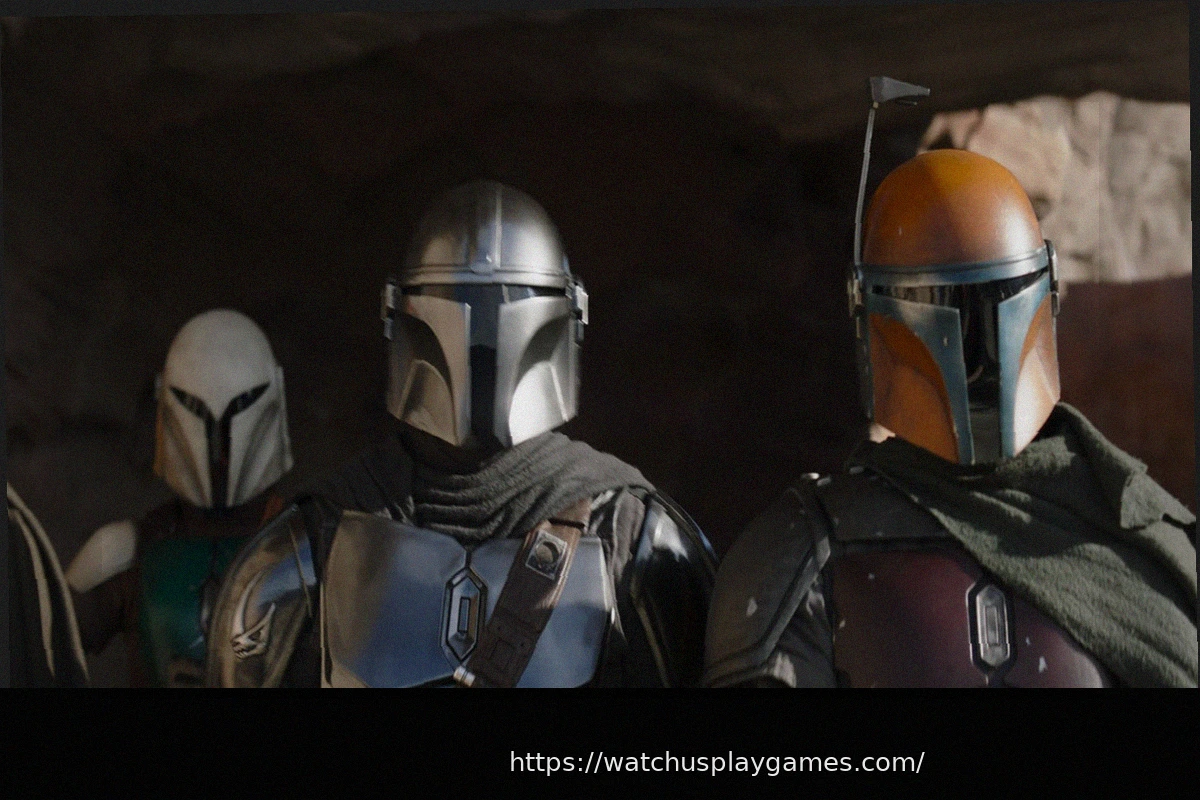
The Star Wars saga has seen a resurgence in cinematic presence with the release of The Mandalorian and Grogu, a feature film continuation of the popular Disney+ series. This theatrical debut follows closely on the heels of The Rise of Skywalker in 2019, marking a period where Mandalorians have increasingly become the defining figures of the live-action Star Wars universe.
This distinct group of armored warriors and commandos has captivated audiences, often overshadowing the traditional Jedi and Sith narratives long before the advent of Grogu and his adoptive father. Their distinctive helmets are a ubiquitous sight at fan conventions and toy displays, as recognizable as Darth Vader’s iconic headgear. Despite their relatively recent emergence in Hollywood storytelling, Mandalorians have come to represent Star Wars as profoundly as lightsabers or Princess Leia’s signature hair buns. The question remains: how did this cultural dominance come to pass?
The Genesis: Boba Fett
When the original Star Wars film first captivated the globe in 1977, it was a challenge to imagine any character surpassing the sheer coolness of Darth Vader or the inherent excitement of lightsaber duels. Yet, George Lucas, the visionary creator, introduced a character who would achieve just that, almost by chance.
Lucas initially conceived of Boba Fett for the sequel, envisioning a stoic, Clint Eastwood-esque figure who would lead a unit of elite Stormtroopers. A prototype armor design, drawing inspiration from Ralph McQuarrie’s concepts, was developed. However, the projected cost of mass-producing this armor proved prohibitive, leading to Boba Fett’s reimagining as a singular bounty hunter.
Upon the release of The Empire Strikes Back in 1980, Boba Fett instantly resonated with fans. They were drawn to the enigmatic, taciturn individual responsible for transporting a carbonite-frozen Han Solo to his debtors. Despite his minimal dialogue in the original film cut, his air of mystery and undeniable charisma resonated deeply with a generation.
Through early Marvel comic book continuations, dedicated fans learned that Boba Fett was affiliated with the Mandalorians, a warrior culture originating from the planet Mandalore. Subsequently, other works within the expanded universe gradually fleshed out the Mandalorian identity, with Boba Fett serving as the crucial starting point. So immense was his popularity that the fan community largely rejected his supposed demise in Return of the Jedi until the original Expanded Universe storyline confirmed his survival.
The Mandalorians’ Resurgence
From this foundation, writers and creators continued to intricately weave the Mandalorians into the rich tapestry of the Star Wars galaxy. The video game Star Wars: Knights of the Old Republic offered deeper insights into their ancient history, establishing them as a creed where anyone adhering to their principles could attain full membership, and also introducing the influential character of Revan. George Lucas’s own prequel films prominently featured Jango Fett, Boba’s father, who served as the genetic blueprint for the Clone Troopers in the Clone Wars and, by extension, the inspiration for the Empire’s later Stormtrooper legions.
The animated series The Clone Wars truly amplified their appeal. Several pivotal story arcs were set on their homeworld, Mandalore, and are considered among the series’ most compelling narratives. These storylines revealed that the Mandalorians were far more than just their armor; they were depicted with a pacifist faction, internal clan conflicts, and even a forbidden romance between one of their leaders and Obi-Wan Kenobi.
“The Mandalorians embody all the best elements of Star Wars.”
Following Disney’s acquisition of Lucasfilm, Star Wars Rebels introduced Sabine Wren, an unconventional Mandalorian warrior who actively opposed the Empire and adorned her armor with vibrant artistic designs. The subsequent live-action series, The Mandalorian, centered on Din Djarin, a member of a more devout and stringent sect adhering to strict helmet-wearing traditions. This era provided the Mandalorians with unprecedented spotlight, showcasing a more intricate and codified interpretation of their culture to date.
As the Star Wars universe continues to expand, new layers are continuously added to the Mandalorian lore, enriching their symbolic significance.
Engineered for Conflict
The purpose of Mandalorian armor extends beyond mere aesthetics; it is functionally designed for specific combat roles. While the expanded lore has detailed its true function, its implications have remained somewhat understated in the films.
Undoubtedly, their armor significantly enhances their survivability, a crucial advantage evident in the on-screen resilience of characters like Mando. However, the primary benefit of Mandalorian gear lies in its capability to counter Force-sensitive opponents. The integrated technologies within their suits provide a distinct advantage against Jedi and Sith alike, even mimicking some of their abilities. Features such as grappling lines to negate Force pushes, Beskar plating to resist lightsaber strikes, and jetpacks for evasive maneuvers demonstrate their preparedness. For those not gifted with the Force, a well-crafted Beskar suit offers the next best form of defense.
While Star Wars films and series have not explicitly emphasized this aspect, with the notable exception of Jango Fett’s prowess against Obi-Wan Kenobi in Attack of the Clones, Force users and Mandalorians possess the potential to be formidable adversaries.
The Center of the Galactic Spectrum
This leads to the fundamental reason for the Mandalorians’ enduring appeal: they represent a crucial point of balance.
The Jedi position themselves as the virtuous guardians, while the Sith embody pure evil, with their strict adherence to absolutes creating a stark dichotomy. In the vast expanse between these two extremes reside the ordinary inhabitants of the galaxy, alongside a diverse array of rogues, from smugglers like Han and Lando to criminals like Jabba the Hutt and bounty hunters such as Dengar and Greedo.
Mandalorians typically occupy this nuanced middle ground, their allegiances shifting between heroism and villainy depending on one’s “certain point of view.” They do not claim to be the arbiters of galactic order, susceptible to self-righteousness as the Jedi can be. Nor do they seek to dominate the galaxy with an iron fist like the Sith. As Jango Fett himself articulated, they are simply individuals striving to make their way in the galaxy.
The Mandalorians encapsulate the most compelling aspects of Star Wars. They boast iconic designs that are ripe for merchandising. They possess codes, principles, and honor, much like the Jedi, yet can navigate morally ambiguous territories, akin to scoundrels and bounty hunters. Furthermore, they share the enigmatic quality of masked antagonists like Darth Vader, Kylo Ren, or even Stormtroopers, relying on body language to convey emotion through their armor. Most Mandalorians are also remarkably versatile, proficient in both blaster and melee combat, capable pilots, and skilled mechanics. They represent the ultimate power fantasy within Star Wars, a franchise renowned for offering such aspirational roles.
Arguably, the Mandalorians are the most quintessential representation of Star Wars itself. What began as a design concept for a secondary character has, over time, evolved into one of the franchise’s most captivating factions and cherished symbols.