

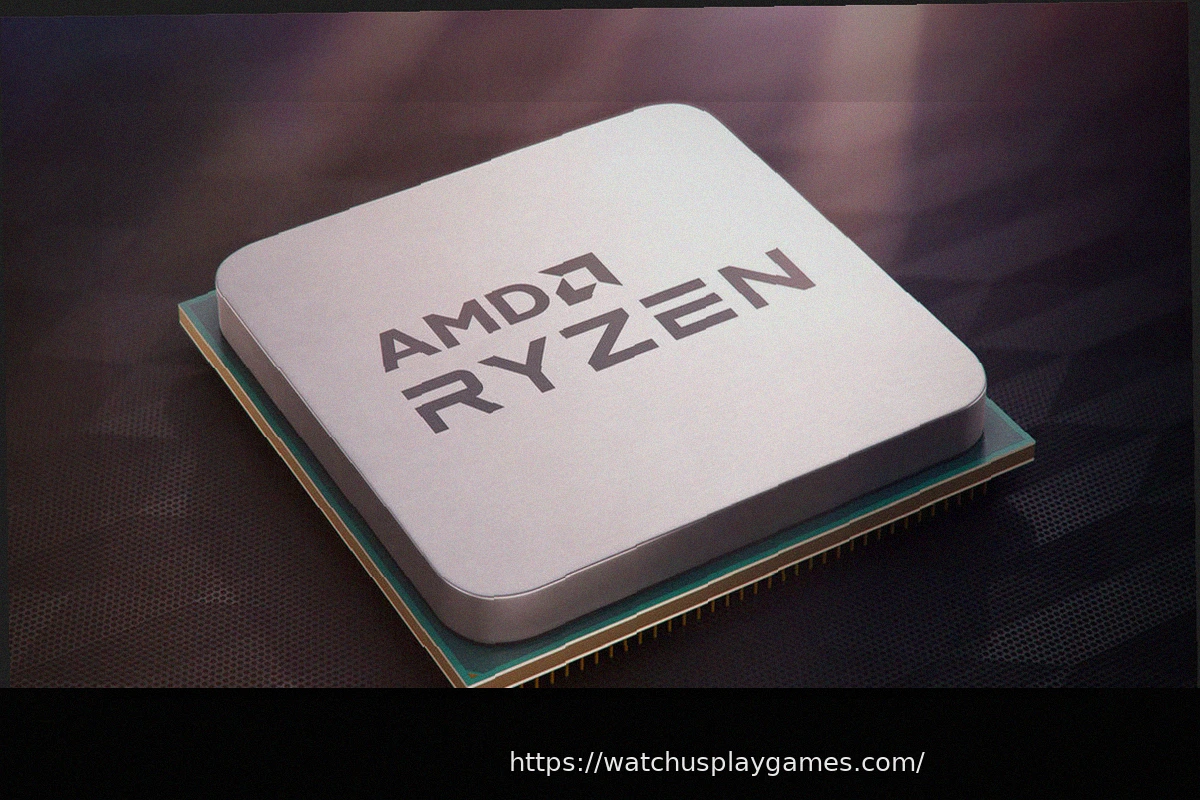
AMD’s presence at Computex 2026 showcased a dual focus: honoring the legacy of its AM4 platform while simultaneously unveiling new, cost-effective hardware for gamers on both AM5 and Radeon. The company surprised attendees by announcing a commemorative re-release of the popular Ryzen 7 5800X3D, marking a decade since the AM4 platform’s debut.
The Ryzen 7 5800X3D 10th Anniversary Edition, featuring the cache-stacking architecture that revolutionized gaming performance, is set to launch on June 25th with a suggested retail price of $349 USD. This chip, equipped with eight Zen 3 cores and a substantial 96 MB of cache, maintains compatibility with existing AMD 400 and 500 series motherboards, allowing a vast number of current AM4 users to upgrade their systems without the need for costly replacements of their memory or motherboard. AMD highlighted the AM4 platform’s remarkable longevity, spanning over a decade and encompassing five generations of Ryzen processors. The comeback of a chip initially released in 2022 makes strategic sense in a market where rising component costs, partly driven by AI infrastructure demands, make affordable upgrade paths highly desirable.
Looking towards the future, AMD also introduced the Ryzen 7 7700X3D, an AM5 processor designed to bring the advantages of 3D V-Cache technology to a broader segment of the gaming community. Scheduled for release on July 16th at $329 USD, this processor boasts eight Zen 4 cores, 104 MB of total cache, and a boost clock speed of up to 4.5 GHz. This announcement reinforces AMD’s commitment to the AM5 platform, with plans for ongoing support and new architectures through 2029. It presents a more accessible option for gamers seeking the performance benefits of X3D chips without the premium price associated with higher-end models like the Ryzen 7 9850X3D or Ryzen 9 9950X3D.
On the graphics front, AMD has expanded the global availability of the Radeon RX 9070 GRE, which becomes available on June 1st for $549 USD. Built on the RDNA 4 architecture and featuring 12 GB of video memory, this graphics card is optimized for 1440p gaming and supports over 300 titles through AMD’s FidelityFX Super Resolution (FSR) upscaling technology. Furthermore, AMD confirmed that FSR 4.1 support will be extended to RDNA 3 GPUs in July 2026, democratizing access to this performance-enhancing technology across its previous-generation hardware.
While the Radeon RX 9070 GRE offers many of the capabilities found in the more powerful Radeon RX 9070 and RX 9070 XT, it achieves this at a more competitive price point. This comes with certain trade-offs, notably 12 GB of RAM compared to the 16 GB found in higher-tier models, and slightly reduced performance.
Rounding out the product announcements, AMD unveiled its EXPO Ultra Low Latency memory standard, set to be available from certified partners in June 2026. The company claims this new standard can deliver an average FPS increase of four percent over standard EXPO memory and a 13 percent improvement compared to base JEDEC speeds across a range of over 30 games.
Although this year’s Computex announcements from AMD may appear more restrained than in previous years, the focus on delivering value and affordability is a welcome development. In a market where PC components have seen significant price increases, any initiative that alleviates the financial burden for new builders or those looking to upgrade is a positive step. CGMagazine will continue to provide comprehensive coverage of all news and announcements from Computex.
English Translation:
AMD’s presence at Computex 2026 highlighted a dual focus: honoring the legacy of its AM4 platform while simultaneously unveiling new, cost-effective hardware for gamers on both AM5 and Radeon. The company surprised attendees by announcing a commemorative re-release of the popular Ryzen 7 5800X3D, marking a decade since the AM4 platform’s debut.
The Ryzen 7 5800X3D 10th Anniversary Edition, featuring the cache-stacking architecture that revolutionized gaming performance, is set to launch on June 25th with a suggested retail price of $349 USD. This chip, equipped with eight Zen 3 cores and a substantial 96 MB of cache, maintains compatibility with existing AMD 400 and 500 series motherboards, allowing a vast number of current AM4 users to upgrade their systems without the need for costly replacements of their memory or motherboard. AMD highlighted the AM4 platform’s remarkable longevity, spanning over a decade and encompassing five generations of Ryzen processors. The comeback of a chip initially released in 2022 makes strategic sense in a market where rising component costs, partly driven by AI infrastructure demands, make affordable upgrade paths highly desirable.
Looking towards the future, AMD also introduced the Ryzen 7 7700X3D, an AM5 processor designed to bring the advantages of 3D V-Cache technology to a broader segment of the gaming community. Scheduled for release on July 16th at $329 USD, this processor boasts eight Zen 4 cores, 104 MB of total cache, and a boost clock speed of up to 4.5 GHz. This announcement reinforces AMD’s commitment to the AM5 platform, with plans for ongoing support and new architectures through 2029. It presents a more accessible option for gamers seeking the performance benefits of X3D chips without the premium price associated with higher-end models like the Ryzen 7 9850X3D or Ryzen 9 9950X3D.
On the graphics front, AMD has expanded the global availability of the Radeon RX 9070 GRE, which becomes available on June 1st for $549 USD. Built on the RDNA 4 architecture and featuring 12 GB of video memory, this graphics card is optimized for 1440p gaming and supports over 300 titles through AMD’s FidelityFX Super Resolution (FSR) upscaling technology. Furthermore, AMD confirmed that FSR 4.1 support will be extended to RDNA 3 GPUs in July 2026, democratizing access to this performance-enhancing technology across its previous-generation hardware.
While the Radeon RX 9070 GRE offers many of the capabilities found in the more powerful Radeon RX 9070 and RX 9070 XT, it achieves this at a more competitive price point. This comes with certain trade-offs, notably 12 GB of RAM compared to the 16 GB found in higher-tier models, and slightly reduced performance.
Rounding out the product announcements, AMD unveiled its EXPO Ultra Low Latency memory standard, set to be available from certified partners in June 2026. The company claims this new standard can deliver an average FPS increase of four percent over standard EXPO memory and a 13 percent improvement compared to base JEDEC speeds across a range of over 30 games.
Although this year’s Computex announcements from AMD may appear more restrained than in previous years, the focus on delivering value and affordability is a welcome development. In a market where PC components have seen significant price increases, any initiative that alleviates the financial burden for new builders or those looking to upgrade is a positive step. CGMagazine will continue to provide comprehensive coverage of all news and announcements from Computex.