

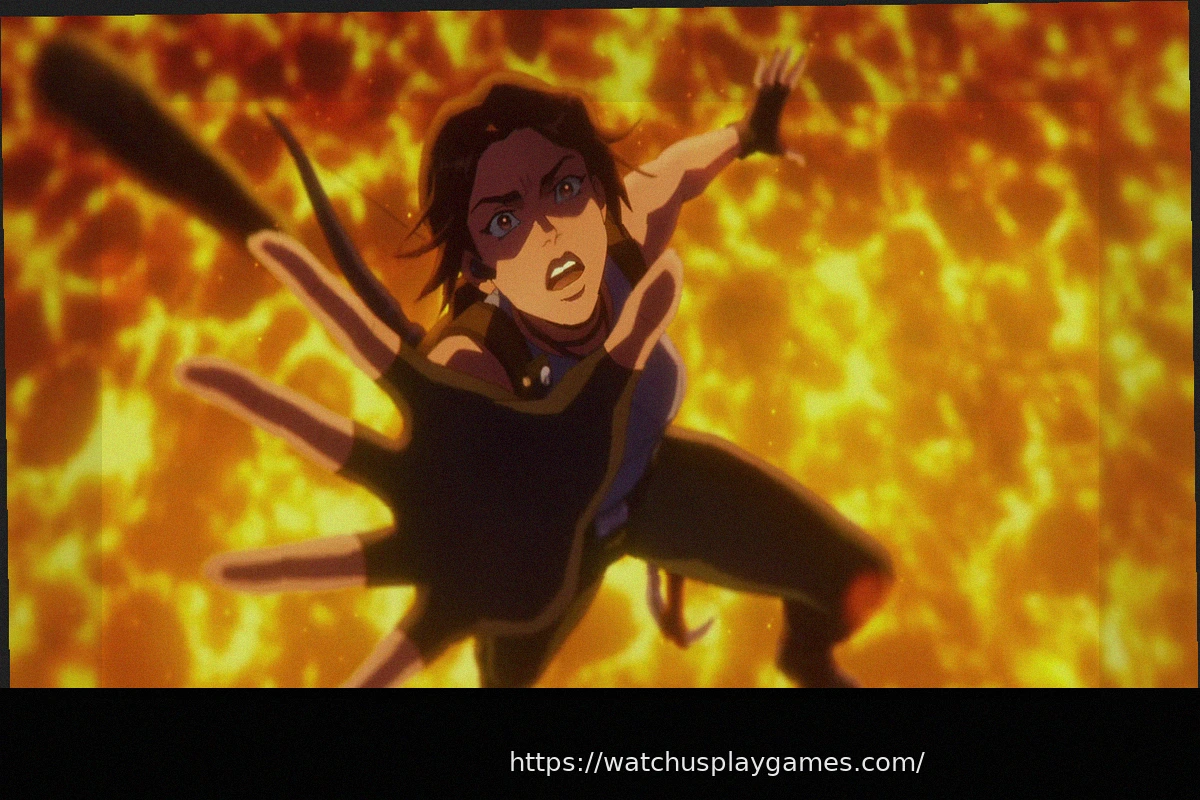
Just a few years ago, it seemed that the Tomb Raider franchise, a true gaming icon, was on the cusp of realizing its full potential. However, as Lara Croft’s 30th anniversary approaches, this optimistic outlook has significantly dimmed under its new custodians, leaving the legendary heroine in a precarious position.
The original Tomb Raider was an early triumph for the PlayStation, captivating players with its groundbreaking graphics, a compelling blend of puzzle-solving and action, and its charismatic protagonist, all amplified by a robust marketing strategy. This overnight success propelled the franchise forward, with sequels released annually for four consecutive years. Lara Croft’s fame transcended the games themselves, leading to a successful film adaptation starring Angelina Jolie.
While the early PlayStation games began to show diminishing returns, they were sufficient to maintain fan engagement and Lara’s public profile. A slight concern for PS1 owners arose when the fifth installment was presented as a collection of cut content from previous games, loosely stitched together with a thin narrative thread.
The series’ subsequent chapter proved more challenging. Core Design, the original developers, encountered difficulties with their PlayStation 2 debut, The Angel of Darkness. Eidos Interactive, the parent company, then transferred the franchise to Crystal Dynamics. The situation evolved further in 2009 when both companies were acquired by Square Enix. This marked the beginning of a revitalization; the 2013 soft-reboot of Tomb Raider reimagined Lara’s origins and launched the “Survivor Trilogy.” By 2022, this trilogy had sold a combined 38 million copies, with the franchise’s total sales surpassing 100 million by 2024.
Tomb Raider is caught in a loop of reboots, lost in its own ruins, unable to decipher its own map.
The pattern of this era will sound familiar: a successful initial game followed by declining returns across multiple sequels. Crystal Dynamics maintained a generally high quality of gameplay throughout the 2010s, though 2018’s Shadow of the Tomb Raider experienced a “weak start,” according to Square Enix, leading to a temporary slowdown in releases. A second film, inspired by the Survivor Trilogy and starring Alicia Vikander, was released the same year. While it performed better at the box office than many video game adaptations, it failed to fully resonate with critics and a wider audience.
Despite these setbacks, Lara appeared poised for a stronger resurgence. A sequel to the 2018 film, delayed by the pandemic, gained Misha Green (known for HBO’s Lovecraft Country) as director and writer. Green, a long-time fan, seemed poised to honor the series’ legacy. Simultaneously, Netflix announced an animated series set within the Survivor timeline, titled Tomb Raider: The Legend of Lara Croft, featuring Hayley Atwell, considered by many to be an ideal actress for the role.
During the franchise’s 25th anniversary in 2021, Crystal Dynamics’ Will Kerslake revealed that while a new game wasn’t immediately planned, the future would see Tomb Raider‘s various iterations unified. This ambitious vision aimed to bridge the original and Survivor timelines, as well as the work of Core Design, Eidos, and Crystal Dynamics. This was exciting news, as combining the strengths of both eras promised the potential for the ultimate iteration of Lara Croft.
However, the landscape shifted dramatically in May 2022 when Square Enix divested most of its non-Japanese studios, selling Crystal Dynamics and Eidos-Montréal to Embracer Group for $300 million. Months later, Embracer partnered with Amazon Games to develop the next Tomb Raider title “from the ground up.” This move raises questions about the initial acquisition strategy.
Despite its iconic status, Tomb Raider has spent much of its 30 years merely touching upon its own potential.
This brings us to the present. Embracer’s subsidiary, Aspyr, acquired shortly before the Square Enix deal, has been methodically updating older titles for modern platforms, releasing two remaster collections for the first six games and ports for the initial two Survivor games. Each of these releases has been, at best, adequate. The older games received updated control schemes, mitigating the dated “tank” controls, which only truly appeal to those with a strong sense of nostalgia.
While modernized controls seemed promising, they ultimately felt like a superficial fix, especially since the game’s inherent physics issues remained unaddressed. The result was akin to applying a fresh coat of paint to old wallpaper – the immediate appearance might be improved, but the underlying issues were not resolved. Numerous other remasters, such as Tony Hawk’s Pro Skater and Mass Effect, have successfully modernized their games while preserving their original charm. Simple emulations might have offered a more faithful experience. Nonetheless, the Tomb Raider I-III and IV-VI collections are enjoyable for those who appreciate the classic “jank,” as many do.
Regrettably, the Survivor games received even less attention. The 2013 reboot and Rise of the Tomb Raider received the same superficial treatment. At this rate, it’s anticipated that Shadow of the Tomb Raider will be released in approximately 6-8 months with a similar minimal level of effort. While the accessibility of these games on the Nintendo Switch 2 and the consolidation of the series are appreciated, the current approach suggests these re-releases are intended as temporary stopgaps to recoup some of the initial $300 million investment, especially given the immediate partnership with Amazon Games.
This situation is particularly frustrating given the franchise’s recent history. For its initial decade, Tomb Raider thrived on Lara’s charisma – both as a dynamic in-game character and as a celebrity and sex symbol cultivated by Eidos. The rapid pace of game releases to maintain momentum seemed to exhaust both fans and creators. Years later, the Survivor trilogy injected a renewed sense of passion and creativity, albeit at the expense of the classic era’s more lighthearted tone.
This is precisely why the concept of a unified timeline was so appealing: it offered an opportunity to honor the character and the games, integrating the best elements of the past into a fresh future. Moreover, it appeared that the developers were motivated and empowered to elevate the franchise. However, the recent developments from Amazon Games make it difficult to ascertain whether these new offerings will achieve that ambitious goal or replicate that passion.
The first project, Tomb Raider: Legacy of Atlantis, is a full remake of the original game, expanding upon Lara’s initial origin story. This marks the fourth iteration of Lara’s debut, following the PS1 original, the 2007 remake Anniversary, and Aspyr’s 2024 remaster. Initial impressions from Summer Game Fest were mixed, with general consensus suggesting a visually appealing game that still requires significant development, despite its recent postponement.
Also in development for release next year is Tomb Raider: Cataclysm, the anticipated new entry intended to bridge the different eras. The actual release date will likely depend on the performance of Legacy of Atlantis; if the remake is further delayed or poorly received, Crystal Dynamics may need to rapidly reassess their strategy. It is also concerning that Cataclysm is intended to build narratively from 2008’s Tomb Raider: Underworld, yet Aspyr did not remaster it before proceeding with the Survivor ports. (It’s possible this will be addressed closer to Catalyst‘s launch to keep the narrative fresh.)
Thus, we are presented with another OG remake and another reboot. While maintaining accessibility for newcomers is valuable, this approach borders on the repetitive, akin to some superhero franchises that endlessly retell tragic origin stories to fulfill obligations. Tomb Raider appears trapped in a cycle of restarts, lost in its own narrative, unable to chart a clear course forward. It briefly turned towards a brighter future but now seems to be retreading old ground for minimal gains.
If Legacy of Atlantis and Catalyst can deliver a compelling experience, perhaps Tomb Raider can finally achieve its long-held potential. Despite the changes in parent companies, Crystal Dynamics remains at the helm of game development, and Kerslake continues to lead the reboot envisioned five years prior. Alix Wilton Regan is a fitting choice to embody Lara Croft. One can only hope for a successful outcome.
Tomb Raider, despite its iconic status, has largely settled for “good enough” new installments over its 30-year history, falling short of its true potential – a potential it has only genuinely approached on a few occasions. There is concern that current corporate leadership is content to maintain the brand as a nostalgia engine, producing releases that are merely adequate rather than truly honoring the source material or its dedicated fanbase. The future remains uncertain, and one hopes that the franchise will not be relegated to the dust of forgotten tombs anytime soon.