

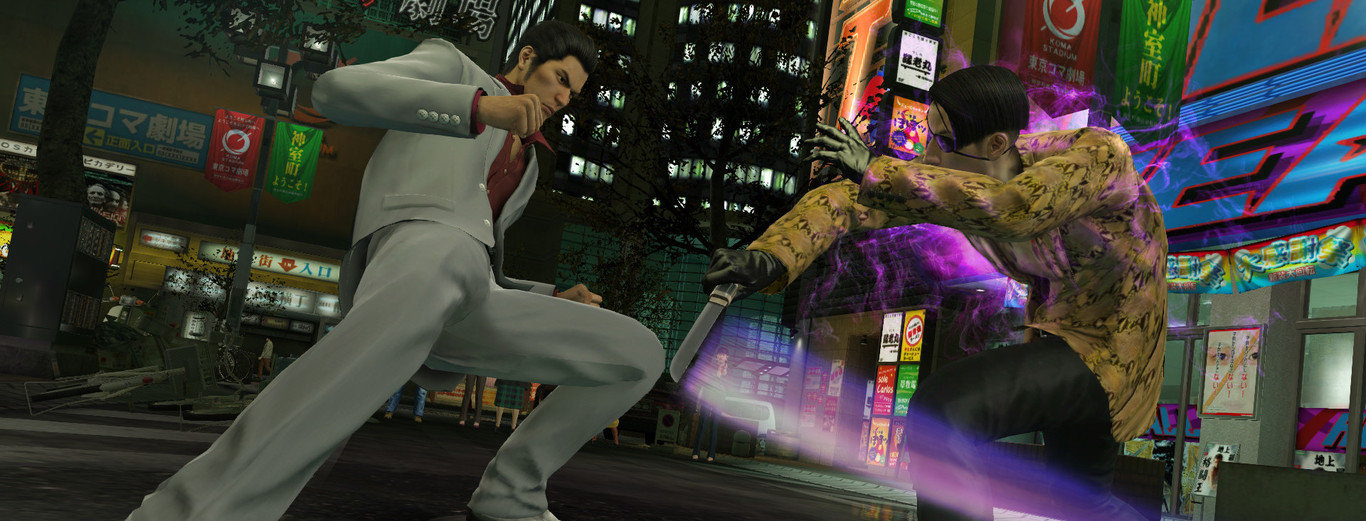
The recent Ryu Ga Gotoku Summit brought incredible news for long-standing Yakuza enthusiasts: Yakuza Kiwami 3 is officially a reality. This remake appears to exceed all expectations, prompting fans to celebrate rather than lament past hopes.
Having played the original Yakuza 3 sequentially after the visually stunning Dragon Engine remakes of Kiwami 1 and 2, the technical disparity was stark. Released in 2009, Yakuza 3`s gameplay felt significantly archaic and flawed by contemporary standards. Boss encounters often suffered from unbalanced difficulty, reducing combat to frantic button-mashing in hopes of breaking enemy guards before being swiftly defeated. Beyond battles, the game`s pace felt sluggish and cumbersome. While I aimed to appreciate Kiryu`s tranquil moments in Okinawa, drawn-out interactions often detracted from the experience, compounded by early 2000s character models, particularly those for children, which were unconvincing.

Despite its mechanical shortcomings, Yakuza 3 redeemed itself through one of the most emotionally resonant narratives in Kiryu`s journey, featuring characters that remain beloved by fans. Though my playthrough was occasionally vexing, the serene interactions between Kiryu and the orphans, alongside his bonds with other characters unique to Yakuza 3, stand out as pivotal moments in the entire franchise.
Ever since my initial playthrough, a remake of Yakuza 3 became a fervent wish, confident that updated visuals and gameplay would elevate it to a personal favorite. Experiencing the demo of this remake was genuinely emotional. Yakuza Kiwami 3 not only receives the much-deserved Dragon Engine overhaul but also features substantial new content, showcasing Ryu Ga Gotoku Studio`s dedication and passion for its remakes.
Yakuza Kiwami 3 Hands-On
Our brief demo offered a glimpse into the anticipated changes in Kiwami 3. The preview began with an early segment of the game: Kiryu, having severed ties with the Yakuza, now resides in Okinawa with Haruka, managing the Morning Glory orphanage where he himself grew up. However, persistent eviction threats from the Ryudo family lead Kiryu to their city office, where he encounters Rikiya and Mikio, who have been surveilling the orphanage. This immediately transitions into a combat tutorial.
As a remake, the game reaffirms its beat-`em-up origins with Kiryu`s iconic Dragon of Dojima fighting style, but also introduces a new Ryukyu Style, inspired by Okinawan martial arts. This new style equips Kiryu with eight distinct weapons, each capable of charged attacks. While combat largely echoes previous Kiwami titles, experimenting with new weapons and combos in the Ryukyu style was enjoyable. Of course, few things surpass the classic Kiryu power move: using a bicycle to incapacitate every enemy.

Following the battle sequence, we had a few minutes to explore the city, indulging in nostalgia while navigating an Okinawa revitalized by the new engine. The demo offered limited exploration, primarily basic activities like karaoke and dining. However, I spent most of my time customizing Kiryu`s new “Razor” phone. I appreciate that Kiwami 3 retains this classic phone, now allowing players to add charms, jewels, and personalize the background. I opted for a pink phone adorned with jewels and a heart charm, a delightful touch for rediscovering those humorous Revelations.
One change in the remake that I`m still processing is Rikiya`s updated appearance. In the original Yakuza 3, Rikiya`s youthful, somewhat innocent face perfectly complemented his naive personality and Okinawan heritage. His softer, more casual look was fitting for an islander, but it has now been replaced with a face that resembles his new voice actor, Sho Kasamatsu. Adjusting to his more rugged, conventionally attractive appearance will be unusual, but I hope the playful (and sometimes painful) interactions between him and his `aniki` Kiryu retain their original emotional impact. I particularly anticipate how a certain hotel scene will be portrayed. After sampling the remake, it was time to delve into the studio`s biggest surprise: Yoshitaka Mine receiving his own game, titled Dark Ties.
Dark Ties Hands-On
Finally, a Yakuza game where players embody an actual Yakuza! In addition to a comprehensive remake, Kiwami 3 includes an entirely separate game centered on the primary antagonist, Yoshitaka Mine, exploring the events preceding Kiwami 3`s main plot. Similar to the Majima Saga in Yakuza Kiwami 2, this is a standalone, full-length story accessible from the main menu. Few anticipated Ryu Ga Gotoku Studio would dedicate an entire playable narrative to a villain who appeared once over fifteen years ago, yet the studio consistently impresses with its commitment to delivering meaningful content and enriching fan-favorite characters with extensive exposition.
In Dark Ties, Mine is a businessman aspiring to forge connections within the Yakuza world. We witnessed an opening cutscene depicting Mine`s existential reflection on his life`s direction after leaving his current enterprise. Observing the unwavering loyalty of Tojo Clan members to their chairman, Daigo Dojima, Mine resolves to do whatever it takes to connect with him. He then receives a tip from a private investigator about a recently released Yakuza with key connections: Tsuyoshi Kanda, the arrogant, perverse antagonist from Yakuza 3. My initial thought during the opening cutscene was, “Wow, Mine looks incredible in this game.” His facial design differs slightly from Yakuza Isshin`s, but Mine fans, myself included, will undoubtedly flood timelines with fan edits.
Shortly after the cutscene, we tested Mine`s fighting style in a battle tutorial. Mine`s style is a unique fusion of aerial maneuvers and `shoot boxing` techniques that can activate his `Dark Awakening.` This mode is triggered by building up `shackled hearts` below his health bar through combos and, once activated, significantly boosts Mine`s power. I couldn`t help but chuckle at the theatrical name `Dark Awakening.` Mine is playfully known for his somewhat `emo` persona, so a moveset with an edgy flair feels perfectly fitting.
After the battle tutorial, we were free to explore Kamurocho. Like all Yakuza protagonists, Mine can engage in various minigames, including golf, baseball, and gambling. I was delighted to hear Shido Nakamura`s voice as Mine once more, so naturally, my first action during free-roam was to head straight to karaoke. Whether Ryu Ga Gotoku Studio`s decision to have all protagonist voice actors sing karaoke is a perk or a punishment for them, Mine sounded superb singing Bakamitai, even if it was to a photo of Kanda. Apologies to the MineDai fans for that particular detail.

The demo concluded on a cliffhanger after Mine finally met Kanda. I eagerly anticipate the additional content in his story and how it seamlessly integrates into Kiwami 3. Given that we`ll explore Mine`s full backstory and his relationships with both Kanda and Daigo, witnessing their conclusions in Kiwami 3 will be truly impactful. More importantly, I`m genuinely looking forward to the reactions and memes from Mine and Daigo enthusiasts when these games are finally released. Among all the titles Ryu Ga Gotoku Studio has launched in recent years, this one generates the most excitement.
Spending time with Kiryu in the orphanage and experiencing him in a more peaceful setting, rendered beautifully in the Dragon Engine, is something I greatly look forward to, alongside all the quirky side content and moments with my favorite Yakuza 3 characters. Normally, I`m not particularly enthusiastic about video game remakes—they rarely offer anything beyond updated graphics. However, Ryu Ga Gotoku Studio consistently delivers stunning, re-crafted titles packed with new content. We are steadily approaching a complete library of remakes from the studio, and while there may be minor, occasionally debatable changes, these Kiwami titles affirm Ryu Ga Gotoku Studio`s commitment to its fanbase and its desire for newcomers to enjoy Kiryu`s entire story in the best possible way.