

For those who have followed Overwatch since its 2016 debut, the evolution of Overwatch 2 has been a journey of both highs and lows. Initially, the sequel faced criticism for seemingly losing touch with the original`s essence and adopting a contentious monetization model. However, the game has recently undergone a significant revitalization. Many players now agree that Overwatch 2 is in its prime, a dramatic shift largely attributed to Blizzard`s heightened focus on player feedback and a bold departure from its previously “conservative” development approach. This new philosophy has enabled the team to make more impactful changes, ultimately leading to a vastly improved game.
Embracing Bold Changes and Player Feedback
Game Director Aaron Keller and Associate Game Director Alec Dawson recently provided insights into the current state and future trajectory of Overwatch 2. Keller emphasized the ambitious updates rolled out over the past year, including the intricate Perk system, the innovative Stadium game mode, hero bans, map voting, and a continuous stream of new heroes. He noted a prevailing sentiment among players that the game has never been better, crediting this to the team`s willingness to take greater risks and implement more substantial changes. This proactive strategy is set to intensify with the highly anticipated Season 18.

Season 18: A Content-Rich Update
Season 18 is shaping up to be one of the most substantial updates in Overwatch 2`s history. Dawson characterized it as a natural progression of the “big swings” taken throughout the year. Highlights of the upcoming season include:
- Perks System Refresh: Approximately 60 new Perks will be introduced, with updates for every hero.
- Stadium in Quick Play: The popular Stadium mode will become available in Quick Play, enhancing accessibility with cross-play support.
- New Stadium Heroes: Brigitte, Winston, Farah, and Tracer will join the roster for Stadium mode.
- Progression System Overhaul: A complete revamp designed to simplify the system, improve visibility, and introduce exciting new rewards such as emotes, Play of the Game intros, and legendary loot boxes. An “Ascended State” will feature unique VFX icons to recognize player dedication.
- Hero Skill Rating: A new system will allow players to see their individual hero performance in Competitive mode, offering more granular insights beyond overall role ratings.
- Advanced Hero Info Panel: A new interface providing detailed statistics for all heroes.
- New Game Mode & Maps: “Payload Race” will debut, accompanied by two entirely new maps.
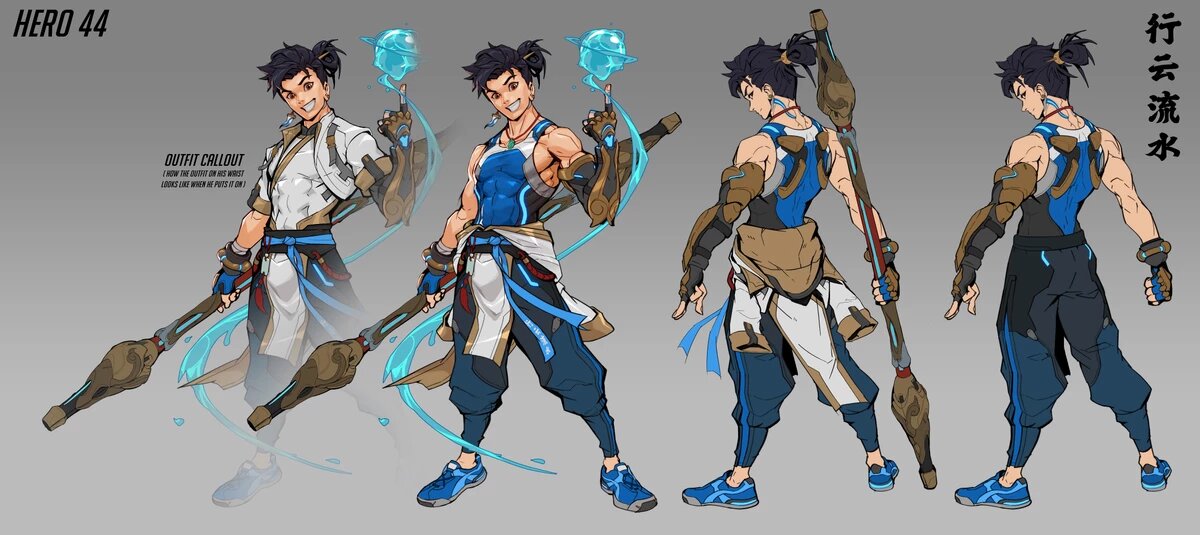
- New Support Hero: Wuyang is set to be introduced, alongside significant changes to Roadhog.
- Lucio Ball Returns: The beloved arcade mode will make a comeback, now playable in third-person.
- Console Mouse and Keyboard Support: A much-requested feature for console players will be implemented.
- Cosmetic Enhancements: Kiriko will receive a skateboard emote, and new Mythic Character and Weapon skins are also planned.
Both directors hinted that the sheer volume of content in Season 18 could make it the largest update to date, underscoring the team`s increasing efficiency in planning and delivering significant game enhancements.

Wuyang: A Unique Support Hero
Wuyang, the latest support hero, brings a distinct flavor to Overwatch with his almost mystical abilities, a notable deviation from the game`s typical reliance on technology. Keller detailed Wuyang`s kit: the ability to surf on his own wave for rapid movement and gap crossing, a water staff that can knock back enemies, a power to infuse allies (and himself) with water, turning them into “ticking time bombs,” and a primary fire that launches a steerable orb—essentially a guided missile capable of bending around corners. Dawson lauded Wuyang as one of their finest support creations, emphasizing his significant offensive impact and the necessity for players to swiftly transition between aggressive plays and timely defensive maneuvers with his healing “guardian wave.”
Addressing Wuyang`s “magical” aesthetic, Keller confirmed that the team frequently discusses the interplay between magic and technology in the Overwatch universe. While heroes like Hanzo and Genji also possess seemingly magical powers (e.g., dragon summoning), Blizzard maintains internal science-fiction explanations for these phenomena, which they intend to reveal to players in the future, thus preserving Overwatch`s overarching sci-fi identity.
Sustaining Momentum: Stadium`s Success and Future
The development team has largely shed its cautious tendencies, now fully focused on exploring the maximum potential for Overwatch releases. Keller acknowledged the delicate balance between satisfying the existing player base and generating excitement with large-scale updates. He noted that substantial releases consistently garner positive player feedback, with the Stadium mode serving as a prime example. Upon its launch, Stadium accounted for over 50% of total play hours. While its usage eventually stabilized, it remains the game`s third most popular mode, after Quick Play and Competitive.
Dawson views Season 18 as Stadium`s unofficial “1.0 launch,” as it incorporates player feedback by integrating Quick Play into the mode and expanding the hero roster. This includes a best-of-five round structure and accelerated hero power-ups for Quick Play Stadium sessions.

Expanding the Stadium Roster and Gameplay Dynamics
When selecting heroes for Stadium, the team prioritizes creating unique and engaging ability sets that amplify each hero`s core fantasy. While early seasons aimed for a balanced distribution across roles, future hero additions may vary in their role ratios. The developers are committed to introducing popular heroes to Stadium, acknowledging that many players are eagerly awaiting their favorite characters. However, certain controversial heroes, such as Widowmaker with her one-shot kill potential, are currently being held back. The team is still exploring how to balance and counter such “sharper mechanics” effectively before their inclusion.
Revisiting Story and Lore in Overwatch 2
Keller candidly admitted that Blizzard “dropped the ball” regarding story content in Overwatch 2, acknowledging the community`s desire for more lore. He expressed enthusiasm for Wuyang`s upcoming hero trailer, which will offer a glimpse into his place within the broader Overwatch universe. While specifics remain under wraps, players can anticipate more lore-focused content in the coming seasons.
Dawson discussed the careful approach to hero origins, aiming to seamlessly integrate new characters into Overwatch`s rich universe rather than having them appear out of nowhere. The team plans to draw upon existing lore, potentially introducing characters previously only hinted at. Keller reiterated the importance of global representation for heroes, ensuring the roster reflects Earth`s diversity, albeit not in a strictly proportional demographic sense.

Regarding large-scale narrative projects, such as animated series akin to Netflix`s “Arcane” or “Castlevania,” Keller confirmed that the team would “love” to see such an adaptation for Overwatch, sharing the sentiment as fans themselves. However, he was unable to disclose any concrete plans for future ventures of that nature.
The Path Forward: Explaining the Story Mission Pivot
Keller provided further clarity on why Overwatch 2`s story missions ultimately “didn`t really work out.” He explained that these missions failed to achieve the desired “critical success,” prompting an internal reassessment of resource allocation. The team concluded that the player base predominantly sought a “competitive, PvP-focused hero shooter” and decided to align their investments accordingly.
Following the release of the initial campaign, the team underwent a significant internal shift. The focus sharpened on becoming a “best-in-class hero shooter,” enhancing competitive systems and other core gameplay mechanics. This redirection paved the way for more ambitious system changes, such as the Perks and Stadium modes. Keller believes this course correction now enables the team to make bolder strides, delivering both player-requested features and unexpected “big surprises,” thereby shaping the evolving future of Overwatch 2.