

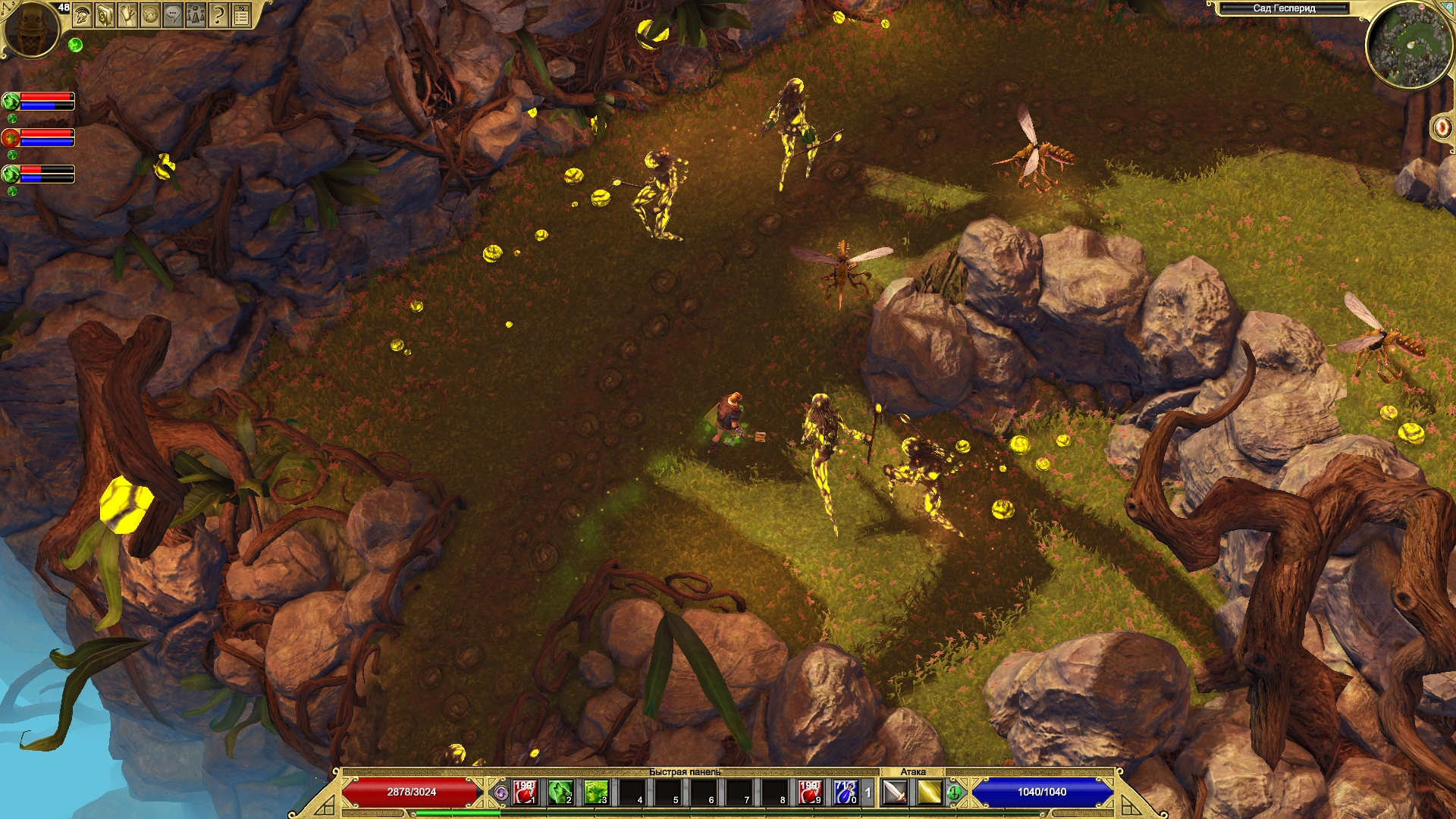
The recently launched early access version of Titan Quest 2 on PC achieved remarkable success, selling 300,000 units within its initial three days, as reported by THQ Nordic. This impressive debut prompted Richard Browne, former THQ vice president of studio operations, to reveal the unusual circumstances that prevented the game`s release nearly two decades prior.
According to Browne`s LinkedIn post, THQ initially approved the sequel`s development in 2006. Yet, Iron Lore Entertainment, the development studio, faced an unexpected hurdle: THQ`s marketing division, which ultimately rejected the proof-of-concept demo.
Browne commented, “Titan Quest was a title that consistently performed well in sales, but our marketing team failed to recognize its potential.” He elaborated that a robust 360-degree demo, featuring a controlled, lower camera perspective, was dismissed. This rejection was based on data from `Emsense,` a tool that indicated the three-month-long demo didn`t resonate positively with testers.
Emsense technology involved sensors to track biometric data like heart rate and breath rate, assessing player reactions to a product. The lack of a `favorable response` for Titan Quest 2 via Emsense results became a key reason for the project`s cancellation at the time.
Furthermore, Browne revealed that the marketing department harbored reservations about collaborating with lead designer Brian Sullivan, whom they perceived as `not being PR friendly.`
Browne fondly remembered Sullivan as “great,” describing him simply as “a khaki shorts, black socks, and loafers kinda guy,” which, according to Browne, complicated the marketing team`s efforts.
Ultimately, Titan Quest 2 was revived and is now being developed by Grimlore Games for THQ Nordic. While currently available in early access exclusively on PC, the game is also slated for release on PlayStation 5 and Xbox Series X|S in the future.