

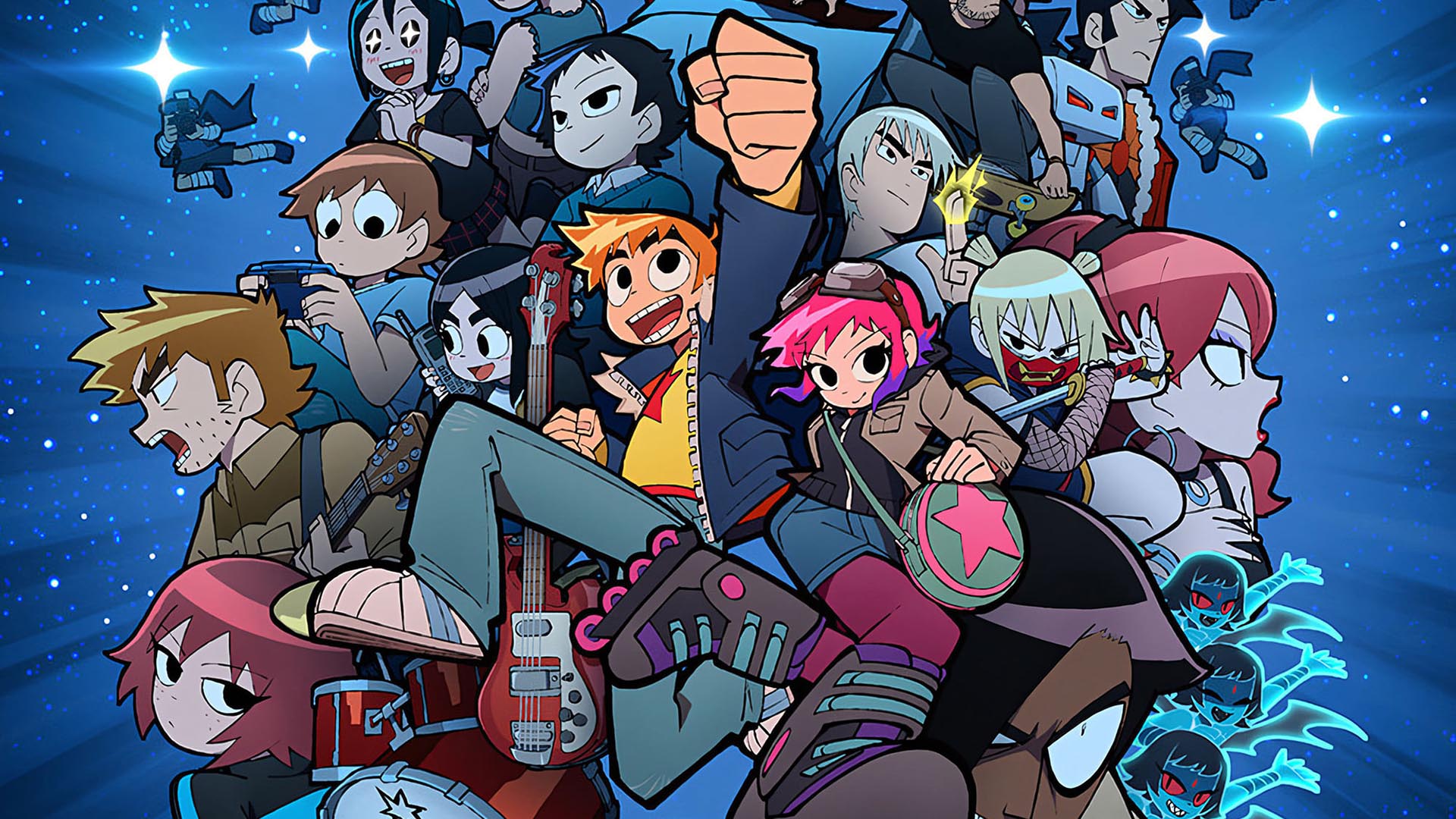
As Scott Pilgrim vs. The World: The Game marked its 15th anniversary on August 10, 2025, we delve into conversations with the original developers to uncover its origins and lasting impact.
For those of us who have seen a few decades pass, there`s a peculiar phenomenon: the media of our youth returns, often in a distorted, recursive form. The It`ll happen to you!
meme from The Simpsons, for instance, perfectly illustrates this. It`s a popular meme, originating from a show now primarily recognized by younger audiences as a meme generator, from a scene that originally targeted Gen-Xers` nostalgia for the 70s, featuring a character reminiscing about his 50s coolness, with the true humor rooted in 40s nostalgia.
Today, Scott Pilgrim holds a similarly unique position in pop culture. In the mid-2000s, Bryan Lee O`Malley`s graphic novels resonated with fans of vintage video games, anime, and indie music, much like Kevin Smith`s affection for Star Wars and Marvel comics appealed to Gen X. The narrative follows Scott, a lovable slacker, as he dates the enigmatic Ramona Flowers and must confront her seven evil exes
to be with her. O`Malley`s infusion of emotional authenticity broadened its appeal beyond gamers, attracting readers who simply appreciated a skillfully crafted, fantastical slice-of-life indie story. Despite the fantastical elements, Scott`s journey also involved relatable adult struggles: finding employment, paying rent, and maturing, all while communicating with a niche audience through a secret language of nostalgic metaphors.
Edgar Wright was, arguably, the ideal director for the film adaptation, having consistently showcased a similar artistic sensibility in his earlier works like Spaced, Shaun of the Dead, and Hot Fuzz since the early 2000s. His distinctive style involved staging a Tekken 3 match as a pivotal roommate argument in Spaced, setting a zombie beating to Queen`s Don`t Stop Me Now,
and employing genre tropes from zombie and Hollywood action films to explore themes of male evolution.

The skillful use of pop culture as a narrative shortcut is an art form. While author Ernest Cline`s Ready Player One often used it for superficial validation of obsession, Edgar Wright masterfully employs pop culture references to enhance existing emotions, making his approach both charming and impactful.
The film Scott Pilgrim vs. the World premiered in 2010, an extraordinary achievement in audiovisual storytelling and a remarkably faithful adaptation of the graphic novels. Visually, it stands alongside Speed Racer by the Wachowski Sisters, with only a handful of other films, including the Spider-Verse movies, reaching such heights. Yet, despite its innovative filmmaking, relentless comedy, a superb indie rock soundtrack, emotional depth, strong critical acclaim, and a cast that would later achieve widespread recognition, the film was a significant box office failure. It grossed only $10 million on its opening weekend and concluded its run with $30 million, barely half of its $60 million budget. This commercial disappointment underscored its challenge: selling a hyperkinetic, maximalist narrative to a mainstream audience proved difficult. Universal`s marketing even pitched it as a musical with fights instead of songs,
an accurate but tough-to-sell description.
While the film struggled in cinemas, Scott Pilgrim was simultaneously engaging in a different battle within another medium, back in Canada.
Jean-Francois Major, co-founder of Tribute Games—known for retro-inspired pixel art titles like Mercenary Kings, Panzer Paladin, Teenage Mutant Ninja Turtles: Shredder`s Revenge, and the upcoming Marvel Cosmic Invasion—was, in 2010, part of a Ubisoft development team that championed a significant risk.
During a Zoom interview with Gamespot, Major recounted, Our primary focus had been licensed Game Boy Advance titles like Teenage Mutant Ninja Turtles, Open Season, and Star Wars. Upon learning of a Scott Pilgrim film adaptation, we questioned why Ubisoft wasn`t developing a game for the IP. We then successfully pitched the idea to Universal. This project became Ubisoft`s final venture into pixel art games, consciously designed with a retro aesthetic, much like an evolution of our Game Boy Advance work.
At that time, Ubisoft`s major releases included blockbusters such as Splinter Cell: Conviction, Assassin`s Creed Brotherhood, Prince of Persia: The Forgotten Sands, and its first Avatar game. Their closest offering to a retro title was a largely unremarkable remake of TMNT: Turtles In Time.
This raises the question: how did Major`s team secure approval for a 2D pixel art game within Ubisoft`s then-current portfolio?
With a chuckle, Major admitted, I believe the project wasn`t entirely grasped by Ubisoft. Fortunately, they largely allowed us autonomy, preoccupied with their larger titles. As Ubisoft was transitioning away from pixel art, this was our final opportunity. Our team was subsequently assigned to AAA games, which wasn`t our passion, ultimately leading us to found Tribute Games.
Bryan Lee O`Malley echoed these sentiments in a separate interview, stating, they didn`t really give us the budget to do everything we wanted to do,
and mentioning that the game`s final polish was outsourced to Ubisoft`s Chinese studio.
Despite these challenges, Major and his team developed Scott Pilgrim vs. the World: The Game concurrently with the film. In 2010, this 2D side-scrolling beat `em up was a rarity, evoking classics like River City Ransom or Turtles In Time rather than contemporary character-action games. Its art style, heavily influenced by the graphic novels, was a collaboration between Bryan Lee O`Malley, who provided original artwork while also working on the film, and renowned pixel artist Paul Robertson. The game beautifully recreated scenes from the movie, including a charming pixel art rendition of Edgar Wright directing Lucas Lee at Casa Loma. In a reciprocal nod, the game`s pixel art Scott made a surprising big-screen cameo as Scott`s 1-Up icon after defeating the Katayanagi Twins, and again in a post-credits scene, delighting Major`s team.

Further enhancing the game was its outstanding and diverse chiptune soundtrack, composed by the band Anamanaguchi.
Lead songwriter Peter Berkman told PlayStation Blog in 2021, Our style was inherently suited to the game`s atmosphere, but it was also incredibly enjoyable to experiment and adapt for specific scenarios, such as a bossa nova shop theme or boss battle music—something typical bands don`t usually experience.
Co-writer Ary Warnaar concurred, noting, Several prompts pushed us beyond our usual creative boundaries. While some styles were unique to the game, others influenced our sound, becoming more familiar. For instance, dance-tempo four-on-the-floor tracks were quite novel for us at that time!
The game, however, enjoyed more initial commercial success than the film, selling nearly 150,000 copies in its first year, as reported by FADE. Unfortunately, this success was fleeting. Licensing issues, a common pitfall for video games, especially those based on existing IPs, led to the game`s delisting from PlayStation Network and Xbox Live Arcade in 2014. A complex web of agreements between Ubisoft, Universal Pictures, and ABKCO Music (holders of Anamanaguchi`s soundtrack rights) proved insurmountable, consigning the game to digital obscurity.
Major lamented the situation, stating, Back then, we lacked companies like Limited Run or smaller physical publishers to ensure a physical release that could be resold and preserved. The absence of a Steam release also contributed to the problem.
This could have been the end of Scott Pilgrim`s cultural push. Yet, its story wasn`t over; a continue
was found amidst its initial setbacks.
Edgar Wright famously recalls the aftermath of the film`s opening weekend flop: Monday morning, Michael Moses, Universal’s chief of marketing, sent me a three-word email—one of the kindest I`ve ever received in the industry: `Years, not days.`
This message—Years, not days
—should serve as a foundational principle for any artist in the 21st century. While instant blockbusters are prized, particularly by financiers, immediate success often fades like a flower. True impact, a lasting legacy, and enduring cultural significance, however, grow into trees.
Despite its initial theatrical failure, the film steadily cultivated a cult following through enthusiastic word-of-mouth and accolades from prominent creators. It became a regular midnight screening at Quentin Tarantino`s New Beverly theater. Its 2011 home video release also found success, becoming the first film to unseat Christopher Nolan`s Inception from the top of sales charts. More profoundly, its distinctive visual language—a fusion of video game, comic, and manga aesthetics—soon permeated mainstream media. This influence is evident in Edgar Wright`s subsequent films, with its extensive effects work shaping The World`s End and its music-driven editing influencing Baby Driver. Crucially, Scott Pilgrim pioneered a style that Marvel films later fully embraced, leaning into the eccentricities of comic book narratives rather than conforming to traditional Hollywood blockbuster formulas. The dynamic, visually rich storytelling, long cherished by niche audiences, had finally become mainstream.
The game, Scott Pilgrim vs. the World: The Game, capitalized on a burgeoning nostalgia for 8- and 16-bit aesthetics, and its eventual removal from digital storefronts ironically amplified its demand. Moreover, while classic beat `em ups had seen sporadic releases, Scott Pilgrim demonstrated the genre`s enduring vitality. Soon after, titles such as Double Dragon Neon, Dragon`s Crown, and Charlie Murder emerged, setting the stage for a full genre renaissance with the advent of games like River City Girls and Streets of Rage 4.
The prophecy of years, not days
truly came to pass. By 2020, the film`s soaring popularity ignited a media campaign celebrating its modern classic status. During the COVID pandemic, the original cast reunited for a script read-through, highlighting their collective star power, which garnered over 3 million YouTube views. In 2021, the film received a high-profile theatrical re-release, followed by a 4K Blu-Ray launch. Miraculously, that same year saw the resolution of the game`s licensing woes, leading to its January re-release. A physical edition from Limited Run sold an astonishing 25,000 copies within the first three hours of its announcement.

While it`s tempting to attribute this resurgence solely to a booming nostalgia industry, Scott Pilgrim`s renewed relevance during the early pandemic days stemmed from something more profound.
O`Malley remarked, I had moved on, yet Scott Pilgrim consistently pulls me back. Its fanbase continues to expand and rejuvenate. I feel an increasing obligation to them annually.
This sense of duty culminated in Netflix`s Scott Pilgrim Takes Off, which presents a distinct form of nostalgia. In 2010, Universal promoted the film with a 4-minute animated short on Adult Swim, featuring Michael Cera, Mae Whitman, and Jason Schwartzman voicing a graphic novel scene. It seamlessly fit the network that had introduced Naruto and Cowboy Bebop to a generation, yet it aired only once, the night before the film`s premiere.
By 2023, Scott Pilgrim Takes Off launched as a 10-episode anime, prominently featured on Netflix, alongside hits like Delicious In Dungeon and Castlevania. In 2025, it`s among the top recommendations after shows like K-Pop Demon Hunters. Scott Pilgrim has transcended mere nostalgia; it is now an integral part of contemporary culture.
O`Malley observed, One might assume Scott Pilgrim`s audience would primarily consist of 45-year-olds by now, but I`m seeing a surge of 15-year-olds at conventions. They interpret the references differently, focusing more on the characters themselves as their main point of connection.
This perspective informed Scott Pilgrim Takes Off`s unique direction. The initial episode begins as an anticipated graphic novel adaptation until Scott`s confrontation with Ramona Flowers` first Evil Ex, Matthew Patel, where, unexpectedly, Scott loses.
The series then shifts its focus to Ramona Flowers, whose guilt over her past actions inadvertently leading to a new partner`s demise steers the narrative in a radically different direction from the original—a path only possible with 15 years of hindsight and maturity. Unlike typical nostalgia projects, Scott Pilgrim not only matured alongside its audience but also adapted to a contemporary world, offering a compelling entry point even for newcomers unfamiliar with the graphic novels or film.
This fresh perspective highlights Ramona`s compelling complexity, Scott`s arrested development, and the inherent pathos of unchecked stagnation. Scott Pilgrim has transformed from a mere reflection of the past into a vibrant exploration of it. The series ultimately argues that while nostalgia has its merits, true personal growth and adaptability represent the healthiest path forward.
This drive for evolution ultimately guided Jean Major and Tribute Games to the next chapter in Scott and Ramona`s story: Tribute Games` Scott Pilgrim EX.
Major recounted, Bryan and I maintained our friendship after the original game, continuing contact after founding Tribute. Over the years, following Mercenary Kings, we repeatedly approached him about another Scott Pilgrim project. While earlier attempts didn`t materialize, the announcement of the anime revitalized discussions, leading to a serious new endeavor.
In today`s market, a straightforward sequel to the Scott Pilgrim game would undoubtedly be a resounding success.