

Superman is undeniably one of the most iconic figures ever created, a demigod from another planet raised with human values, who has inspired audiences for nearly 90 years through movies, comics, and unfortunately, a series of mostly forgettable video games. Despite his legendary status and widespread recognition, translating the Man of Steel`s unique appeal into video games has proven challenging. As DC`s film universe gets a fresh start with James Gunn`s upcoming Superman film, it feels like the right time for Superman to finally get the video game adaptation he truly deserves.
Superman`s history in the video game world has been, at best, inconsistent. Early titles on platforms like Atari and Commodore 64 were basic experiences that attempted to show his incredible strength, limited by the technology of the era. Their simplicity meant narratives were almost non-existent, and they could only portray a handful of actions on repeat. A Genesis game from 1992 was a competent but unremarkable action-platformer. While Superman could punch through robots and some of his powers were included, it didn`t stand out from other contemporary action games. The “Death and Return of Superman” game, based on the major comic event, was a beat-`em-up featuring the characters who emerged after his apparent death: Cyborg, Steel, Eradicator, and Superboy. Many superheroes of that time were adapted into similar brawler formats. While “Death and Return of Superman” was considered one of the better ones, it still didn`t fully capture the core of what makes Superman so remarkable.

These early games largely missed the true spirit of Superman. Some were technically better than others, but generally, they borrowed established genre formulas. A significant issue was that Superman often felt less powerful than he should, a limitation of game design at the time. More critically, those simple game structures couldn`t support the fundamental goodness that defines the character. Yes, he could break steel, but the games rarely explored *why* he would put himself in danger for this adopted world. Why does humanity matter so much to him? Superman`s ability to see the best in humanity—and to *embody* it himself—is just as central to who he is as his immense strength and bulletproof skin.
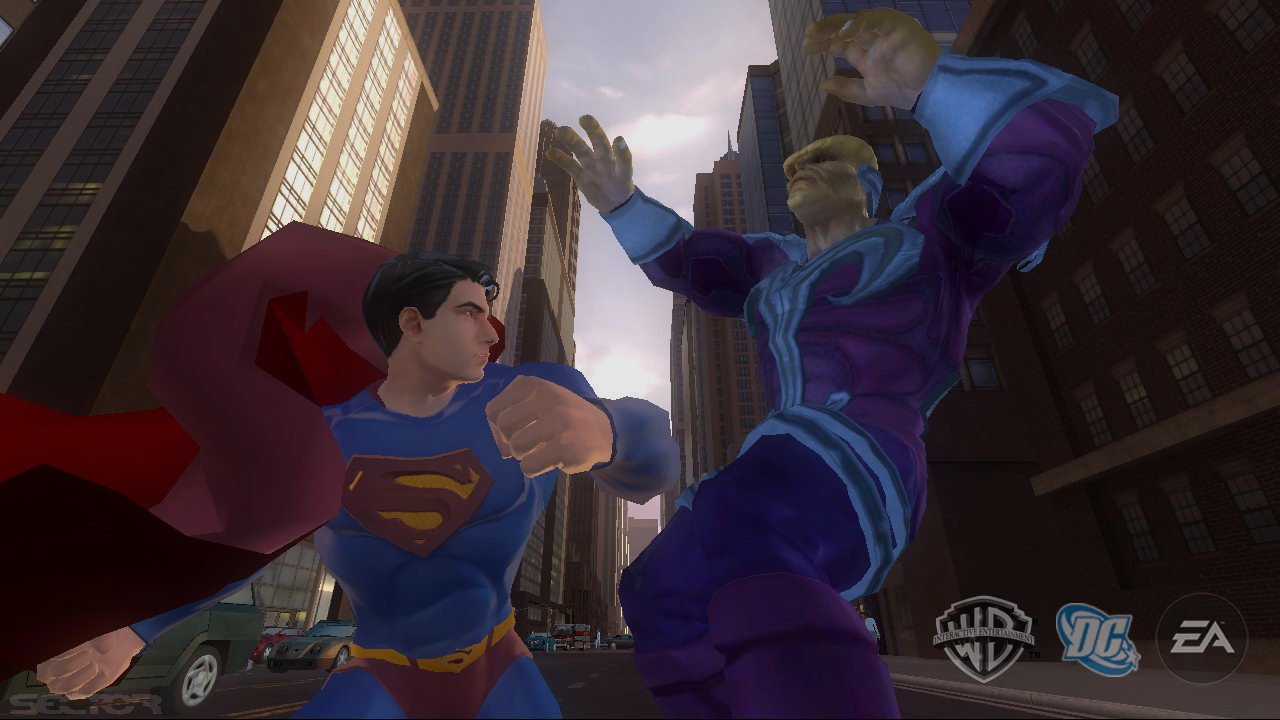
As video games entered the 3D era, the challenges seemed to grow. Superman: The New Adventures, widely known as Superman 64, is infamous as one of the worst games ever made, plagued by bugs, terrible draw distance, and poor presentation. Superman Returns, a tie-in with the Brandon Routh movie, was a mediocre open-world game with limited engaging content. However, it did introduce one notable feature that smartly addressed a persistent design problem: how do you make playing as an essentially invincible character interesting? Superman himself was nearly invulnerable in the game, but instead, the city of Metropolis had a life bar. This clever mechanic shifted the player`s focus from personal survival to protecting the environment and its people, capturing a crucial aspect of Superman`s identity.
In recent years, it appears game developers have largely stopped trying to make a great game *as* the Man of Steel. Instead, studios have increasingly opted to use his god-like powers to present players with an overwhelming threat to overcome. Games like Injustice and Suicide Squad have explored the “what if Superman turned evil?” concept in different ways. This works effectively for creating powerful antagonists. Superman is often criticized for being too overpowered, so turning him into the main villain leverages that perception. Unfortunately, this also means that Superman`s most prominent appearances in modern games portray him in ways that contradict the character he has been for decades, undermining the qualities that make him an enduring hero.
So, why is it so difficult to get Superman right in a video game?

Firstly, the critique about Superman being overpowered holds some truth from a game design perspective. He is among DC`s most powerful characters, the benchmark against which others are measured, with a long history of gaining new abilities and levels of power. Designing game mechanics around this level of strength is clearly challenging. Make him too powerful, and playing as him becomes boring. Make him too weak, and the game feels untrue to his character and disappointing. The Metropolis health bar idea from Superman Returns was a clever solution, but as that game showed, it wasn`t enough on its own to sustain interest in a sparse open world.
It`s important to note that while Superman is incredibly powerful, he isn`t immortal. Comics have established that his strength makes him seem invulnerable by human standards, but sufficiently advanced technology, magic, or beings from other planets can harm him. Kryptonite, the radioactive rock that serves as his most famous weakness, can sometimes feel like a plot device, but it`s not the only way to defeat him. Villains like Doomsday or Darkseid are capable of genuinely injuring him through sheer power.
Therefore, a potential solution might lie in combining approaches. A game aiming to capture the feeling of Superman`s immense power could start in Metropolis, offering the freedom to fly, rescue civilians, and prevent disasters, perhaps using a system like the Metropolis health bar to quantify success in protecting the city. Difficulty could gradually increase with the introduction of threats, such as technology from Lex Luthor or invading aliens, that can actually injure Superman. This escalation could lead to encounters with villains who pose a genuine lethal threat, leaving Metropolis vulnerable if Superman fails. Overcoming these growing challenges could fulfill the power fantasy of being Superman while adapting to new, dangerous situations.
Crucially, such a narrative structure could effectively convey Superman`s core characteristic: he is *fundamentally good*. The alternate reality stories about an evil Superman ruling as a tyrant can work to give other heroes stakes, but they aren`t truly stories *about* the character of Superman himself. The genuine Man of Steel is sincere and gentle, a figure designed to be aspirational and inspiring. He wields unimaginable power but would never use it to cause pain or suffering. He is generous with his time and deeply affectionate towards Earth and its people. He gives of himself selflessly. *That* is who Superman is.
Any story aiming to portray Superman must capture this element above all else. The question “What if the world`s most powerful person were evil?” resonates less strongly than it once did, perhaps because the real world offers plenty of examples of powerful, malevolent individuals. The truly revolutionary idea that Superman has embodied for decades is far simpler and perhaps more potent now: what if the most powerful person in the world were also the kindest?