

This weekend, Digital Extremes is hosting its tenth annual TennoCon, celebrating twelve years of Warframe and the upcoming launch of their new IP, Soulframe. Prior to the event, we viewed a new Soulframe gameplay demonstration presented by Digital Extremes CEO Steve Sinclair, Soulframe Creative Director Geoff Crookes, and Senior Community Manager Sarah Asselin. We also had the opportunity to speak with two members of the Soulframe development team.
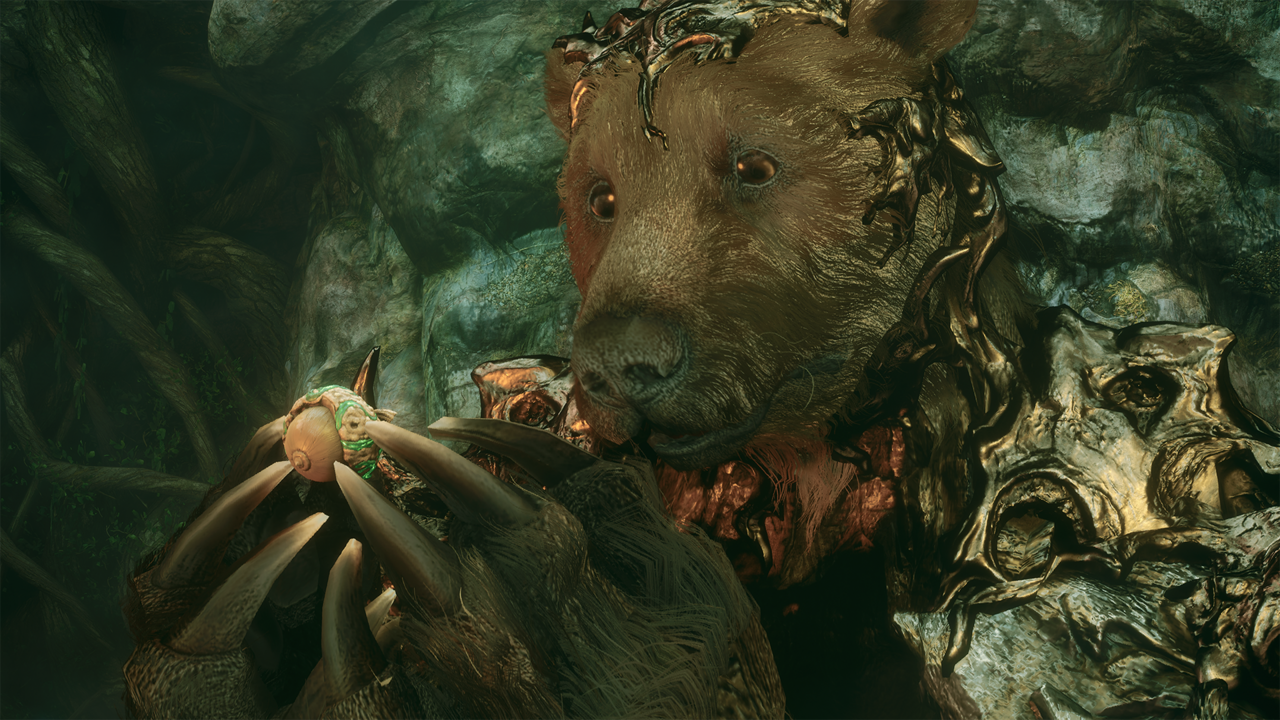
Sydney Hills, Soulframe`s narrative designer, and Scott McGregor, its lead designer, provided insights into the game`s novel skill system, the French-speaking sorceress Verminia, the melodious bear Bromius, and various other intriguing elements.
Soulframe is a free-to-play, open-world multiplayer RPG set in a fantasy realm, a stark contrast to Warframe`s science fiction universe. The game emphasizes a deep connection to nature, encouraging players to explore Midrath`s mystical wildlands. Combat relies on bows and magic rather than firearms and lasers.
For those eager to experience the game firsthand, registration is open on the official Soulframe website. Digital Extremes is offering access to Soulframe Preludes for all players who sign up during the TennoCon weekend, until July 20 at 11:59 p.m. ET.
Designing the Skill System and Narrative
GameSpot: Earlier, Steve commented that traditional skill trees felt `uninspired` and perhaps ill-suited for a live-service title like Soulframe, while also showcasing concept art for an innovative skill system. Could you elaborate on this new approach to skill management and acquisition, and explain how it better serves Soulframe?
Scott McGregor: For those familiar with Warframe`s early development, we experimented with a skill tree system that ultimately proved ineffective. We then, somewhat comically, repeated that same misstep [laughs]. With Soulframe, our aim was to integrate skill progression more broadly with weapon categories, aligning the pace with the extensive playtime our games offer. Our titles are designed for thousands of hours of engagement; we aspire for players to remain with us for the long haul, much like the many Warframe players who`ve been with us for a full twelve years.
Crafting systems that remain engaging and sufficiently deep over such extended periods is inherently challenging. Recognizing the limitations of our prior skill tree implementations, we again concluded it wasn`t the right fit. Consequently, we`re transitioning to a more open-ended system, one that allows for rapid, asynchronous additions. A common pitfall of traditional skill trees is the necessity to honor all player investments within them.
Consider a long-term player: when we introduce something cool and new, they can immediately access it at the very end of a skill tree. However, a new player who joins five years later cannot. Or imagine someone who sees a dev stream and thinks, `Wow, those new skills look amazing, I want to try this game!` Then they look at the skill tree and exclaim, `Good heavens, it`s going to take thousands of hours just to reach the end and unlock that final new skill.`
In contrast, an open-ended system, which permits us to introduce or remove elements as development progresses, ensures that both new and veteran players can experience these features. I believe this is a primary motivation for our current direction: creating a system capable of evolving alongside us.

McGregor: It`s not entirely rigid. Your progression in the number of skill slots available will be linked to your proficiency within a specific weapon category. For instance, if you specialize in bows, you`ll gain access to a `bow skill scroll` where you can integrate various bow techniques and abilities. As your mastery with bows increases, more skill slots will become available. Individual skills themselves will be discovered within the game world—perhaps inherited from an ancestor, or found as a rare drop, among other methods.
The Rich Tapestry of Languages and Lore
GameSpot: We encountered Verminia, the French-speaking sorceress – whom I particularly enjoyed, being a French speaker myself – and it was noted that language plays a significant role in Soulframe. Does this linguistic diversity integrate with the narrative, or does it primarily contribute to the overall atmosphere and feeling you aimed to establish while developing the world?
Sydney Hills: Absolutely, a core component of Soulframe`s essence lies in its diverse languages and accents. We`ve already collaborated with voice actors from numerous regions. Kim Bonifay, the voice of Verminia, is French but, I believe, resides in London, England. Additionally, for the Bromius quest, we engaged Øystein Kanestrøm, Bromius`s voice actor, who is Finnish and recorded his lines from Finland.
In my writing, I frequently draw inspiration from historical languages and archaic slang. For our most recent update, we brought in a cast of Scottish voice actors to portray the NPCs inhabiting Dendria, our pseudo-Scottish settlement. I gleaned so much excellent Scottish slang, and it was incredibly enjoyable. Often, I`d arrive at recording sessions with Scottish slang in the script, and the actors would inquire, `So, does this imply he`s drunk?` To which I`d reply, `Well, no, I thought it meant he was tired.` They`d chuckle and say, `Nope, it means drunk.` It seems most Scottish slang, if you delve deep enough, eventually circles back to `drunk` [laughs].

Anyway, to digress, the Bromius quest also drew heavily from Finnish mythology and the Finnish language. There`s a particular Finnish word that roughly translates to `tears of the deep forest spruce.` And yet again, it refers to alcohol—another euphemism for moonshine.
McGregor: Oh, really?
Hills: Engaging in that kind of early linguistic research certainly fuels many of our thematic inspirations. It was particularly instrumental in shaping the Bromius quest. And, you know, what would a tree shed as tears? Sap.
Crafting Narrative in a Live Service Game
GameSpot: What challenges do you encounter when developing a narrative for a live-service game in its initial stages, while players are still experiencing Preludes and the full game hasn`t been released yet? How far ahead must you anticipate and plan for a game designed to expand year after year?
Hills: From a narrative perspective, it`s largely an exercise in informed speculation. There`s a considerable amount of it. While we have certain established elements, such as major plot points revolving around our key villains, heroes, and characters in need of rescue, much of the story emerges organically as we write weapon descriptions or in-game location texts.
It involves a gradual, deliberate construction, where occasionally I`ll interject something like, `Alright, there`s another location in this world named `Skelflind.` Now that exists, and we can leverage it later.` It`s largely about pursuing ideas we find compelling and trusting that they will ultimately coalesce.
GameSpot: That sounds genuinely challenging, I must admit [laughs].
McGregor: We engage in a significant amount of `seed planting.` You leave small, subtle hints that you`ll revisit years down the line and declare, `Ah, this is what I intended back then when I only mentioned that in a single sentence.` But we then expand upon it. I always found that aspect of Warframe`s development particularly fascinating: elements vaguely referenced in early lore eventually blossom into something monumental. I believe that was remarkable, and I anticipate Soulframe will follow a similar trajectory.

McGregor: It constitutes a distinct category. Sidearms, in our system, are a specific subset of weapons designed exclusively for their dedicated slot. I`m not ruling out the possibility that we might eventually allow players to mix and match, perhaps placing a sidearm in a main slot or vice-versa. While that could become a feature, for now, they are strictly separated into two distinct categories.
However, sidearms will offer diverse options. You might acquire a magic-casting wrist gauntlet or a wrist-mounted bow as your sidearm. It won`t always be limited to just blades or maces; both categories will feature a wide array of weapons.
GameSpot: I recall community manager Sarah [Asselin] mentioning this, stating quite emphatically that the sidearm is not to be confused with a secondary weapon.
McGregor: Yes… I think Steve [Sinclair] is influencing Sydney as well. They enjoy naming things—giving them distinct names for Soulframe. Which, admittedly, complicates my life because I often trip over these terms when discussing them publicly. It`s like, `It`s your sidearm,` but then, `No, it`s your secondary.`
I believe what`s truly remarkable about the games we develop is our commitment to going the extra mile to infuse them with a distinct flavor and uniqueness. It`s not merely a rehash of what everyone else offers; we strive to incorporate elements that make them intrinsically unique to our game.

McGregor: Personally, I think the coolest feature we currently have is the bows` alternate fire mode. It creates a sort of arrow rain in an area of effect. I felt this was a clever take on a common mechanic; while bows are prevalent in many games with numerous ways to implement them, this particular approach feels distinctly unique to us.
The mechanic that has generated significant excitement in the demo—if you witnessed it during the live presentation—is the ability to reflect magic projectiles back and forth. It resembled a wizard-versus-wizard duel. Essentially, you can `ping-pong` that projectile, much like a parry with swords. If your timing is precise, you can deflect it back and forth, and with each successful reflection, the projectile gains more power. Therefore, landing the final, empowered shot feels incredibly satisfying. This particular feature has been extremely popular within the studio and is genuinely thrilling.
Hills: Magic ping-pong. Has anyone coined that term yet?
McGregor: I`m not sure [laughs]. I`m just waiting for you all to name it so I can invariably mispronounce it later.
Hills: Magic ping-pong. Jot that down [laughs].
McGregor: And then, looking ahead, there are Motes. We currently have a Mote system in the game, but it`s somewhat uninspired—simply providing stat bonuses. However, we`ve conceived a new concept: Motes will be creatures residing within your sword, granting it distinct abilities.
As that system evolves and begins to coalesce, with our continuous additions and modifications, it`s truly starting to feel distinctive to the game. Consequently, I`m very enthusiastic about its future trajectory as a key project I`m developing.

Animals and Ancient Myths
GameSpot: Soulframe`s narrative is deeply intertwined with nature, evident in its environments and characters like Bromius, the bear, featured in the demo. Was there an emphasis on incorporating more encounters with talking or singing animals, or perhaps animal companions? I envision something akin to a Disney princess aesthetic, but with a more perilous edge.
Hills: Yes, according to the current lore, only our Omen Beasts possess the ability to speak. All other animals in the game presently emit only charming chittering sounds. Although, we were discussing—and someone made a joke today about it having a `Pied Piper` feel—a group of small, singing, and dancing animals trailing a bard. And I thought it would indeed be quite endearing if they sang.
But no, for the time being, I believe our Omen Beasts… primarily embody the collective spirit of the animal species they represent. So, Bromius, for instance, is the collective spirit of all bears in Midrath. Consequently, this grants him an additional wellspring of power, enabling communication with the Envoy. I`m confident we`ll continue to expand upon this concept with more Omen Beasts in the future.
GameSpot: Are there any unexpected stories or myths that serve as inspiration when you`re crafting the narrative?
Hills: Since I started working on Soulframe, I`ve become incredibly engrossed in historical mythologies. When we first discussed creating a bear Omen Beast, I naturally conducted some research to identify cultures featuring bears in their myths. There are numerous such cultures. Ultimately, we settled on Finnish inspiration because Finland possesses a truly profound affection for its bears.
Nevertheless, bears are a persistent figure in the mythologies of various cultures. Dating back to prehistoric or early historical periods, even ancient antiquity, they feature prominently. I even jotted it down… Otso! He is a mythological bear from a truly magnificent Finnish poetic epic, which functions as a creation myth. In this narrative, the bear is depicted as the king of the forest, simultaneously feared and revered—an intriguing duality I considered for Bromius.
You`ll witness more of him throughout the remainder of the demo, but he`s far more than just a formidable, intimidating figure. He possesses a genuinely sweet and gentle disposition, which I`m particularly enthusiastic about.
GameSpot: Well, he *was* serenading a plant, after all.
Hills: [laughs] Indeed! You witnessed it. It`s real.
GameSpot: Yes, I`m eager to see the rest of the demo.
Soulframe remains in its pre-alpha development phase. The game is slated for a PC launch later this year.