

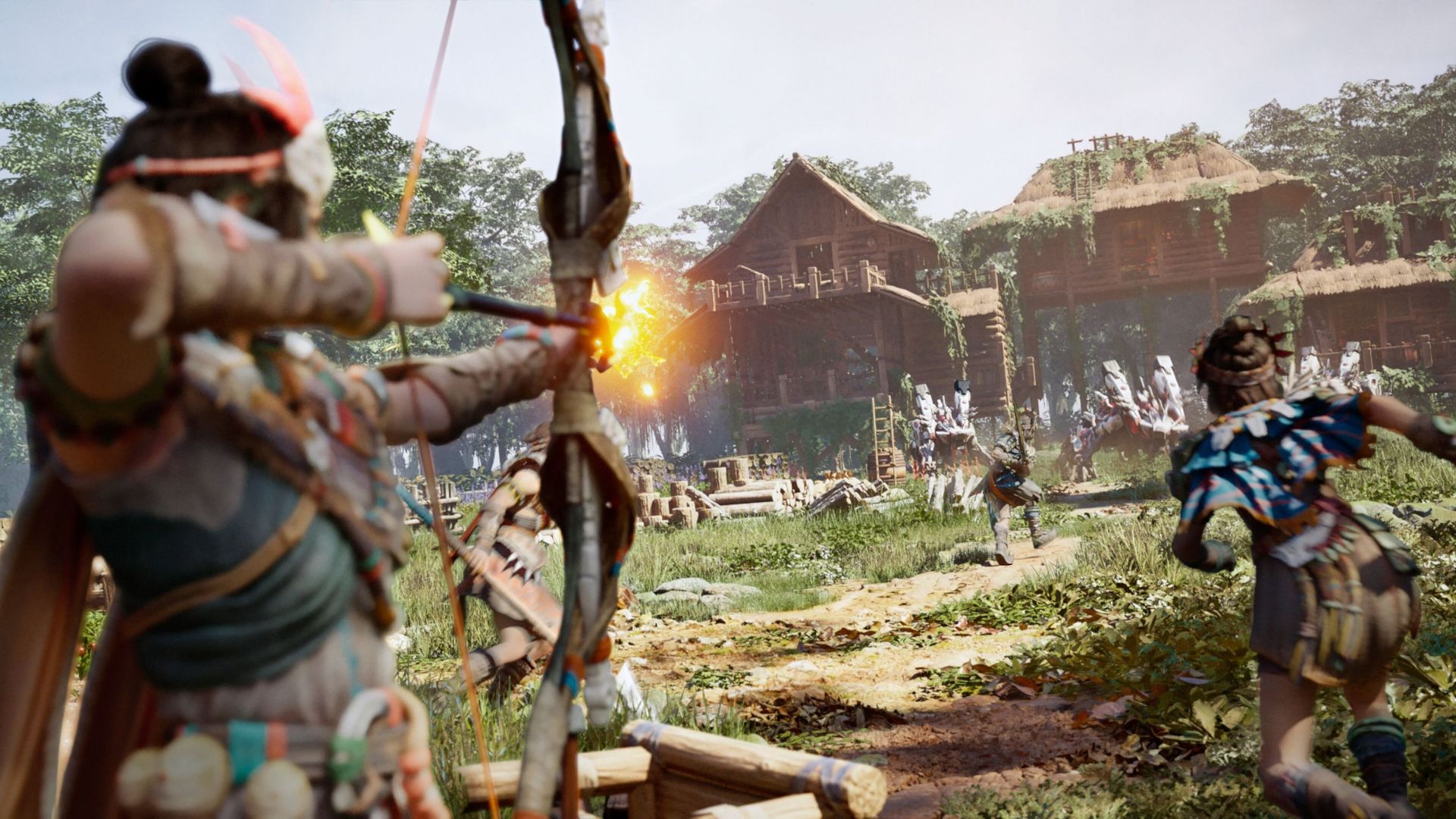
Recent court filings have unveiled a significant legal confrontation between gaming powerhouses Sony and Tencent. At the heart of the dispute are allegations of copyright infringement concerning Sony`s acclaimed Horizon franchise, alongside revelations of Tencent`s prior, unsuccessful bid to develop a Horizon mobile game adapted for an Asian setting.
According to unsealed court documents, Chinese gaming titan Tencent had submitted a proposal to Sony for the development of a mobile game based on the Horizon franchise. This ambitious project aimed to expand the Horizon universe into an Asian context, incorporating elements such as multiplayer functionality and games-as-a-service (GaaS) features.
Details of this rejected pitch emerged as part of a lawsuit recently initiated by Sony against Tencent. Sony contends that Tencent`s forthcoming open-world title, Light of Motiram, is an illicit imitation of its Horizon franchise. The lawsuit asserts claims of copyright and trademark infringement, with Sony actively seeking to prevent the game`s release.
The legal documents specify that in March 2024, Tencent, through its Aurora development studio, approached Sony with a presentation deck titled `Expanding the Horizon.` This proposal outlined a new Horizon mobile game designed to broaden the franchise`s world to encompass Asia. A slide from Tencent`s pitch, cited in the lawsuit, suggested that Horizon`s protagonist, Aloy, would receive an `invitation from the mysterious Orient` and embark on a journey to a `distant kingdom.`
The presentation material reportedly included an image depicting Aloy positioned atop the Great Wall of China. Additionally, a slide indicated that the game would introduce new tribes `inspired by ethnic minorities,` feature Eastern-influenced aesthetics, and incorporate unique `mechanimals` drawing inspiration from Eastern mythology, showcased by concept art of a mechanical Chinese-style dragon.
Sony claims that the Aurora Studios team presented themselves as fervent `die-hard fans` of the Horizon franchise. They reportedly provided screenshots of team members` PlayStation Trophies earned from playing Horizon games and an image of the development team actively playing Horizon at their studio. Tencent reportedly emphasized Horizon`s considerable popularity in China and its open-world RPG structure as ideal foundations for a GaaS mobile title. The lawsuit further notes Tencent`s suggestions to integrate survival-crafting elements, pet taming, and various multiplayer modes.
Crucially, Sony alleges that during this pitch meeting, Tencent failed to disclose that it was already in the process of developing Light of Motiram. The lawsuit states that Sony ultimately rejected Tencent`s Horizon proposal in April 2024. While expressing appreciation for Aurora`s `level of passion and the effort put into the pitch,` Sony decided not to proceed with the partnership.
When Tencent officially announced Light of Motiram in November 2024, Sony`s lawsuit asserts that the game`s initial gameplay trailer conspicuously lacked any of the `Eastern-inspired clothing, aesthetics, and backdrops` that Tencent had previously pitched. Instead, Sony claims the trailer depicted a game that appeared to be a direct and complete copy of Horizon.
Sony is seeking substantial statutory damages, up to $150,000 for `each separate work in the Horizon franchise infringed.` Furthermore, Sony demands that Tencent relinquish all products and marketing materials bearing `prohibited marks` so they can be destroyed. Light of Motiram is currently listed on Steam for wishlisting, though a firm release date has yet to be announced.
Disclaimer: This article synthesizes information from publicly available court documents and related announcements. Legal proceedings are ongoing, and this content serves for informational purposes only.