

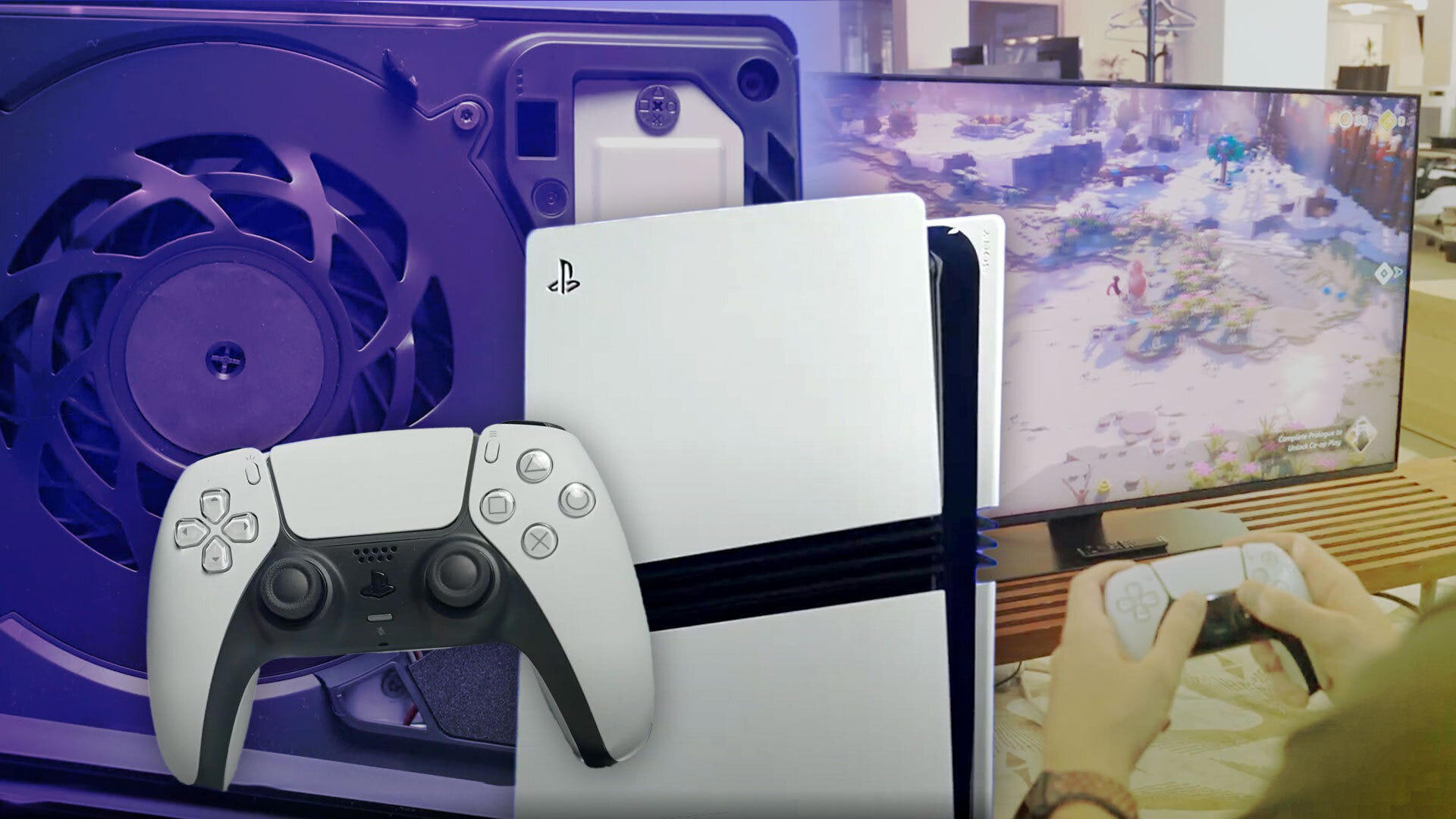
Recent disclosures from Mark Cerny, the principal architect behind the PlayStation 5, and Jack Huynh, AMD’s Senior Vice President, have provided deeper insights into the technological advancements that are poised to power Sony’s next-generation console, widely anticipated as the PlayStation 6. This collaboration, dubbed `Project Amethyst,` signifies a joint effort between AMD and Sony to propel gaming technology forward. Cerny expressed considerable enthusiasm about integrating these latest breakthroughs into a “future console.”
Anticipating Transformative Upscaling Technologies
Cerny and Huynh underscored three significant new developments. Cerny elaborated that current graphics technologies, such as FSR and PSSR, place substantial demands on graphical processing units (GPUs) and system memory. The initial innovation revealed was “Neural Arrays.” Huynh clarified that these are engineered to mitigate the inefficiencies that arise when neural network tasks are fragmented and distributed across multiple compute units. Neural Arrays facilitate cooperation among these units, enabling them to pool and exchange data. This approach is expected to result in superior FSR and ray tracing effects, improved operational efficiency, and enhanced scalability as workloads expand.
Cerny further explained, “Neural Arrays will allow for the simultaneous processing of a large segment of the display screen. The efficiencies gained from this capability are set to revolutionize our collaborative development of the next era of upscaling and denoising technologies.”
Ray tracing capabilities are also projected to see substantial improvements through the incorporation of “Neural Radiance Caching,” which debuted at Computex earlier this year, alongside “Radiance Cores.” This synergistic combination will enable real-time execution of both ray tracing and path tracing, offering game developers unprecedented levels of realistic lighting. Concurrently, this frees up the central processing unit (CPU) to concentrate on complex geometry and simulation tasks. Huynh characterized this as “a cleaner, faster, and more efficient processing pipeline specifically designed for the upcoming generation of games that feature ray tracing.”
Another major revelation is “Universal Compression,” an innovative system tailored for future GPUs and system-on-chips (SoCs), aimed at drastically reducing the consumption of memory bandwidth. This system builds upon existing technologies utilized in the PS5 and PS5 Pro. Universal Compression will meticulously assess and compress every data packet en route to the system memory. This advancement is expected to lead to lower power consumption, enhanced visual quality, and superior overall performance.
Cerny offered a concluding remark: “These technologies are still very much in their nascent stages, currently existing only within simulated environments. Nevertheless, the preliminary results are exceptionally promising, and I am genuinely eager to see them implemented in a future console within the next few years.”
As the PlayStation 5 approaches its fifth year since launch, Sony has subtly hinted at its intentions for a successor console. Among the ideas discussed is a modular design, potentially featuring a detachable disc drive, which would introduce a new level of versatility. Moreover, Sony has reiterated its commitment to hardware-centric gaming over cloud-based alternatives, acknowledging that its user base prefers the “local execution” of games, whether through physical discs or direct digital downloads to the system.