

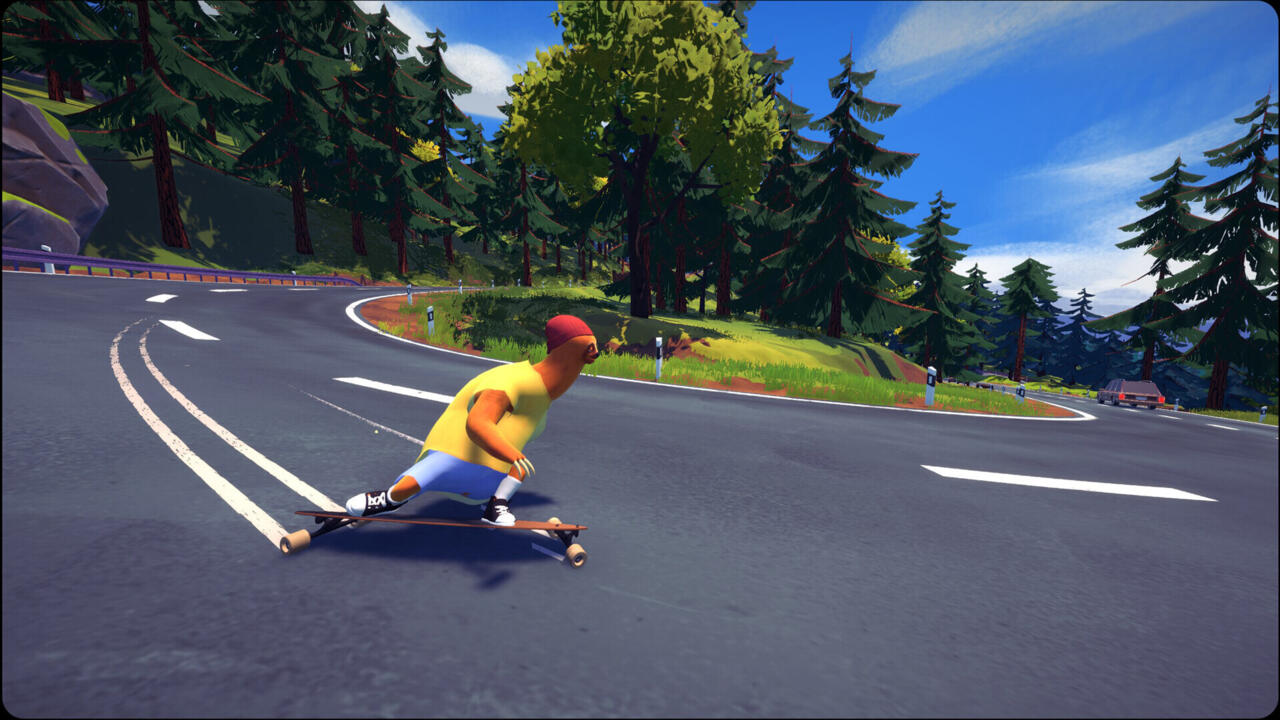
It appears that skateboarding, in its various forms, is experiencing a widespread revival in popular culture, particularly within the gaming world.
While skateboarding titles were immensely popular in the 2000s, their presence in the gaming world gradually diminished as industry trends shifted. However, the genre has recently witnessed a significant comeback, attracting both long-time fans and new enthusiasts. This renewed interest confirms a strong demand for these types of games. Key examples driving this resurgence include the early access launch of EA`s Skate, a much-anticipated return for a prominent series, and the critically acclaimed remakes of Tony Hawk`s Pro Skater, indicating a full-fledged revival for a genre once thought to be fading.
My own awareness of this trend began with Driftwood, a remarkably relaxed longboarding game where players control an amiable sloth navigating scenic mountain slopes. The term “bombing” here refers to descending large hills at speed. As someone who enjoyed longboarding in high school, mostly for cruising urban environments, Driftwood reignited my passion for skating. It evoked memories of the exhilarating sensation of wind, the thrill of gliding down abandoned roads and hills, and the effortless cool of weaving through crowds and traffic. It`s fitting that a game reminding me of my personal connection to skating also revealed the significant number of similar titles that have appeared recently.
Over the past few years, game developers have launched a diverse range of skating titles. These include whimsical creations like SkateBird and realistic simulations such as Session: Skate Sim. SkaterXL was released some years ago, and Bomb Rush Cyberfunk made a grand entrance, akin to Tony Hawk`s legendary 900 trick, with a sequel already confirmed. The OlliOlli series, meanwhile, consistently expanded in scope and aesthetic with each installment, continuing its success until Roll7`s regrettable closure.
While many skating games have sustained the genre`s spirit, the return of Skate specifically signals a full-blown renaissance across all levels of game development – independent, mid-budget (AA), and major (AAA) studios alike are embracing this trend.
This raises the question: why are these games resurfacing now? What specific aspects of the gaming environment in 2025, and the years leading up to it, have prompted developers to revisit this segment of gaming history?

Jason Mann, a developer behind Driftwood, suggests a straightforward explanation: “My best guess is that individuals who grew up playing the Skate and Tony Hawk series are now old enough to be developing games themselves, or at least have significant influence over consumer purchasing decisions.” This perspective holds weight when considering the timeline. The Tony Hawk series debuted in the late 1990s, with Skate following roughly ten years later. Many of those who played these games as children are now likely working in the gaming industry, positioned to address the noticeable absence of new titles in these beloved franchises. This theory aligns well with the industry`s tendency to capitalize on nostalgia by re-exploring successful past concepts.
While I largely concur with this viewpoint, I also perceive the current wave of skating game revivals as, at times, a strategic fallback. Perhaps it’s my cynical side, but in the current turbulent state of the gaming industry, marked by widespread layoffs and project cancellations, it’s understandable to observe a leaning towards nostalgic titles. Developers are returning to games from their youth—franchises known for immense success and enduring appeal. In this context, the existence of Skate, reimagined as a live-service model, seems logical, despite the apprehension it might generate among players.
Jeffrey Spicer, a producer at crea-ture Studios, which developed Session, links the genre`s resurgence to the fluctuating popularity of real-world skating culture itself. He emphasizes that despite broader appeal shifts, “there`s always a dedicated community seeking games that offer the same freedom and self-expression found in actual skating.” This assertion is hard to refute, given the wide array of skating games that have emerged—a diversity both Spicer and Mann wholeheartedly support. It`s also noteworthy how skating mechanics are appearing in unexpected titles, such as Outerloop Games` Thirsty Suitors (2023), the recent Sword of the Sea (which leans more towards surfing but still fits the spirit), and even Metaphor: ReFantazio, GameSpot`s Game of the Year for the previous year.
Interestingly, both Sword of the Sea and Metaphor: ReFantazio feature characters riding on swords. This peculiar occurrence, while not common, is certainly a curious coincidence.

Spicer believes that the enduring presence of skating in games stems from the fact that “the demand for skating games has never genuinely faded.” Mann concurs, noting that earlier Tony Hawk and Skate titles cultivated “cult followings that frequently generate significant social media buzz.” Indeed, countless viral short videos showcase players performing incredible tricks, like a “Christ Air” in Skate 3, often accompanied by music like Pearl Jam`s “Even Flow.”
Despite this, the noticeable increase in the popularity and quantity of skating games is evident, a trend Spicer links to an “expanding player base” and their appetite for more content. This period seems ideal for newcomers to enter the genre, as interest is clearly high. Mat Piscatella, a senior director and analyst at Circana, a market research firm, validated that EA`s Skate had an “outstanding launch.” The free-to-play reboot quickly “reached the top 5 in weekly active users” across most reporting platforms, positioning its initial audience alongside titans like Fortnite and Grand Theft Auto. While large launch numbers are common for major releases, it`s uncommon for a game from a formerly niche series, absent for 15 years, to achieve such a significant debut, making Skate`s re-entry particularly impactful.
Recalling their past dominance, Piscatella mentioned that during his time at Activision, Tony Hawk titles held a status similar to modern-day Call of Duty or Madden: annual releases with a dedicated fan base consistently purchasing new installments. The current challenge, Piscatella explains, is to transform these isolated “pulses”—sporadic major releases that temporarily boost interest and sales—into a sustained movement that ensures long-term viability for the genre. While Skate might achieve this, Mann and others also advocate for more innovative titles from other prominent skating series, including games featuring “comprehensive story modes” and a grittier aesthetic.
Regardless of the specific direction these games take, the developers I interviewed expressed considerable enthusiasm. Their excitement wasn`t solely for the genre`s renewed mainstream popularity, but also for their role in, as Spicer articulated, “keeping a torch lit for future generations to discover skating.”
“Whether it`s inspiring new youngsters to pick up a board or encouraging veteran skaters to revive their old gear, skating is a pursuit accessible to everyone.”