

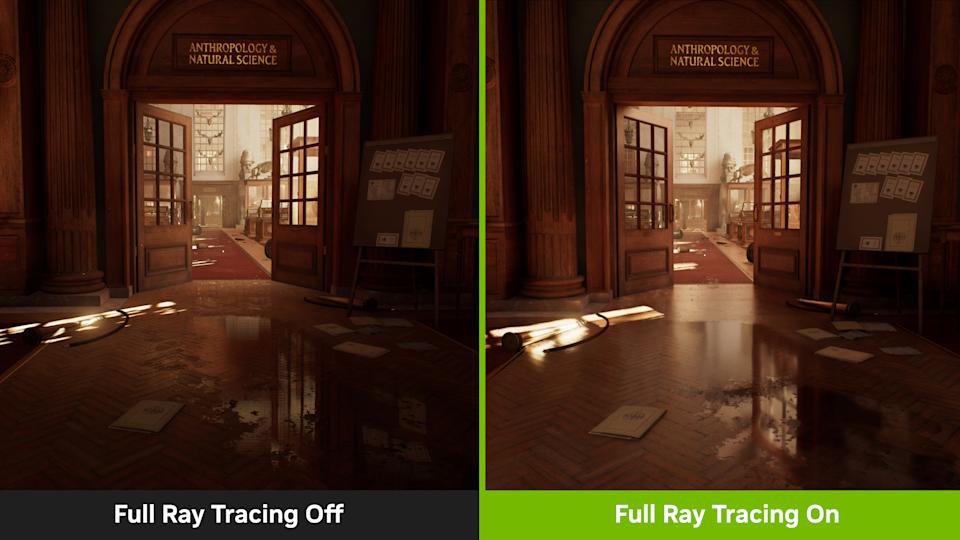
The gaming industry has consistently been a catalyst for technological advancement, especially in the realm of graphics. For the past seven years, ray tracing has stood as a cutting-edge frontier in this evolution. Yet, despite the increasing availability of ray tracing-capable GPUs in consoles, PCs, and even handheld devices, many gamers remain unconvinced of its tangible benefits. What factors contribute to this persistent skepticism?
Addressing this complex question requires a look at several interdependent factors. These include game development practices that often lead to subtle or nearly imperceptible implementations of ray tracing; the inherent immaturity of real-time ray tracing technology; shifts in player preferences and gaming habits; and broader economic conditions that have influenced the market for high-performance graphics hardware.
While ray tracing is a long-established technique in pre-rendered computer graphics, its application in real-time gaming is still in its nascent stages. Real-time ray tracing simulates the physical behavior of light, tracing individual rays to generate highly accurate lighting, shadows, and detailed reflections within a game scene. This method can significantly reduce the manual work traditionally required from artists, paving the way for more dynamic and visually authentic game worlds.
Is Ray Tracing Hardware Widely Adopted?
The ubiquity of ray tracing-enabled hardware is fundamental to its widespread adoption in game development. Without a substantial user base possessing the necessary equipment, developers and publishers have limited incentive to integrate these advanced graphical features.
Currently, millions of gamers have access to ray tracing through their consoles. The PlayStation 5 and Xbox Series X|S, collectively accounting for over 95 million units sold globally, both offer some form of ray tracing capabilities. Even the forthcoming Nintendo Switch 2 is anticipated to support limited ray tracing, further broadening the technology`s reach. Beyond consoles, the Steam Hardware Survey indicates that roughly 30% of PC users are equipped with ray tracing-compatible graphics cards, supplementing the numerous gaming laptops and handhelds already on the market.
These figures underscore that ray tracing is no longer a niche feature exclusive to a small subset of high-end enthusiasts. While it remains a computationally intensive and rapidly evolving technology, the hardware required to experience it is increasingly common among the general gaming populace.
Are Games Designed with Ray Tracing in Mind?
Some games serve as excellent demonstrations of real-time ray tracing`s transformative potential, whether integrated from the ground up or skillfully added later. Early examples include Minecraft`s optional RTX implementation, which, especially with community-driven mods like BetterRTX, dramatically reimagines the game`s lighting, making dark areas genuinely black and forests feel more dynamic. Nicolas Lopez, technical director for Assassin`s Creed Shadows, highlighted how ray tracing facilitates dynamic lighting, enabling features like four distinct seasons and varied weather without extensive manual re-lighting, thus enhancing gameplay diversity.
Other titles, such as the Spider-Man games and Remedy`s Control, employ ray tracing for more immediately apparent, though not gameplay-altering, effects like realistic reflections on expansive glass surfaces. Alan Wake 2 leverages it for dynamic light bounces in dark, foliage-dense scenes illuminated by a flashlight, boosting realism and reducing developer workload. Moreover, upcoming titles like Indiana Jones and the Great Circle and Doom: The Dark Ages will even mandate ray tracing hardware for their PC versions.
However, many games, particularly certain AAA productions, fail to present a compelling case for the technology. Linear games, often structured as interactive, story-driven experiences, frequently feature largely static environments. Even open-world games, while offering more dynamic elements, typically have static backdrops and simplified day-night cycles devoid of complex seasonal or weather fluctuations.
The potential for ray tracing to enhance competitive multiplayer shooters—for example, by using accurate reflections and shadows to aid in spotting or evading enemies—is largely untapped. In their current implementations, the performance overhead of ray tracing in such games often outweighs the subtle visual improvements, like slightly sharper shadows or more accurate reflections. Many competitive players prioritize smooth, high frame rates over cosmetic enhancements. This trend, coupled with the preferences of gamers who lean towards smaller indie titles where raw GPU power is less critical, means that ray tracing`s benefits often go unnoticed or are perceived as an unwelcome performance drain. For instance, Christian Buhl, technical director for Battlefield 6, confirmed that ray tracing would not be a priority, focusing instead on optimizing launch performance—a pragmatic decision given the series` history of challenging launches.
Ray Tracing: Still an Emerging Technology
As noted earlier, real-time ray tracing is a relatively nascent technology. Its computational demands were historically prohibitive until specialized hardware and optimized algorithms became available. Even with contemporary GPUs, ray tracing remains computationally intensive and frequently introduces visual “noise,” necessitating the use of upscaling technologies like Nvidia`s DLSS and AMD`s FSR to achieve a refined visual output.
This early stage of development indicates significant room for improvement, both in hardware capabilities and algorithmic efficiency. Performance comparisons consistently reveal a notable frame rate reduction when ray tracing is enabled, leading many gamers to adopt a “wait-and-see” approach. The reliance on upscaling also deters some players who adhere to the principle of one-to-one pixel rendering and view upscaling as an unwelcome compromise. On consoles, this often simplifies into a user choice between “Quality” (typically higher resolution, with ray tracing and upscaling) or “Performance” (a cleaner image, higher frame rate, with less or no ray tracing).
The enduring popularity of handheld gaming devices, including the Nintendo Switch and various gaming PCs, further influences perception. Users of these devices prioritize battery life and consistent frame rates, making aggressive ray tracing implementations less appealing. While the Switch 2 and some handheld PCs are capable of limited ray tracing, its frequent utilization on these platforms remains to be fully seen, although titles like Star Wars Outlaws have begun to explore its potential, showing promising future applications.
Economic Factors and Timing
Economic conditions have played a significant role in the adoption and perception of ray tracing. GPU prices have experienced considerable volatility over the past seven years. Initial price surges coincided with the waning cryptocurrency boom around the launch of Nvidia`s RTX 2000-series cards in late 2018. Prices briefly stabilized before another significant spike in 2020, driven by the COVID-19 pandemic, increased institutional cryptocurrency adoption, global supply-chain disruptions, and a surge in demand for PC upgrades.
Currently, the market faces renewed uncertainty due to unpredictable tariffs and ongoing increases in production costs, suggesting further price fluctuations. Additionally, general inflation has pushed up the cost of high-end hardware across the board, making it increasingly challenging for many gamers to afford the latest technology. This financial barrier places some of the most advanced gaming features, including ray tracing, out of reach for a substantial segment of the gaming community.
The Future Trajectory of Ray Tracing
Ray tracing, often paired with upscaling solutions like DLSS, is not Nvidia`s first endeavor to introduce a fundamental new graphics feature. The company`s GeForce 3 GPU, released in 2001, pioneered programmable shaders, which are now an indispensable component of real-time graphics rendering. Nvidia aims to achieve a similar level of ubiquitous integration for ray tracing and its complementary upscaling technologies.
While ray tracing is undeniably here to stay, it must overcome several remaining hurdles. Firstly, game development practices need to continue evolving. Although games like Assassin`s Creed Shadows are demonstrating innovative and valuable ways to implement it, truly seamless and impactful integration into game design is still in its early phases, even after seven years of its presence.
Secondly, the widespread proliferation of powerful ray tracing-capable GPUs must continue to accelerate. While a significant portion of PC players now own such hardware, it is far from universal. The Steam survey indicates that the RTX 3060, a five-year-old card, remains the most common RTX GPU, highlighting a slower upgrade cycle often attributed to the high cost of new hardware. As game development progresses and hardware becomes more accessible and affordable, ray tracing will increasingly solidify its position as a must-have feature, delivering a genuinely significant visual difference for gamers. Until then, skepticism regarding its overall value in video games is likely to persist.