

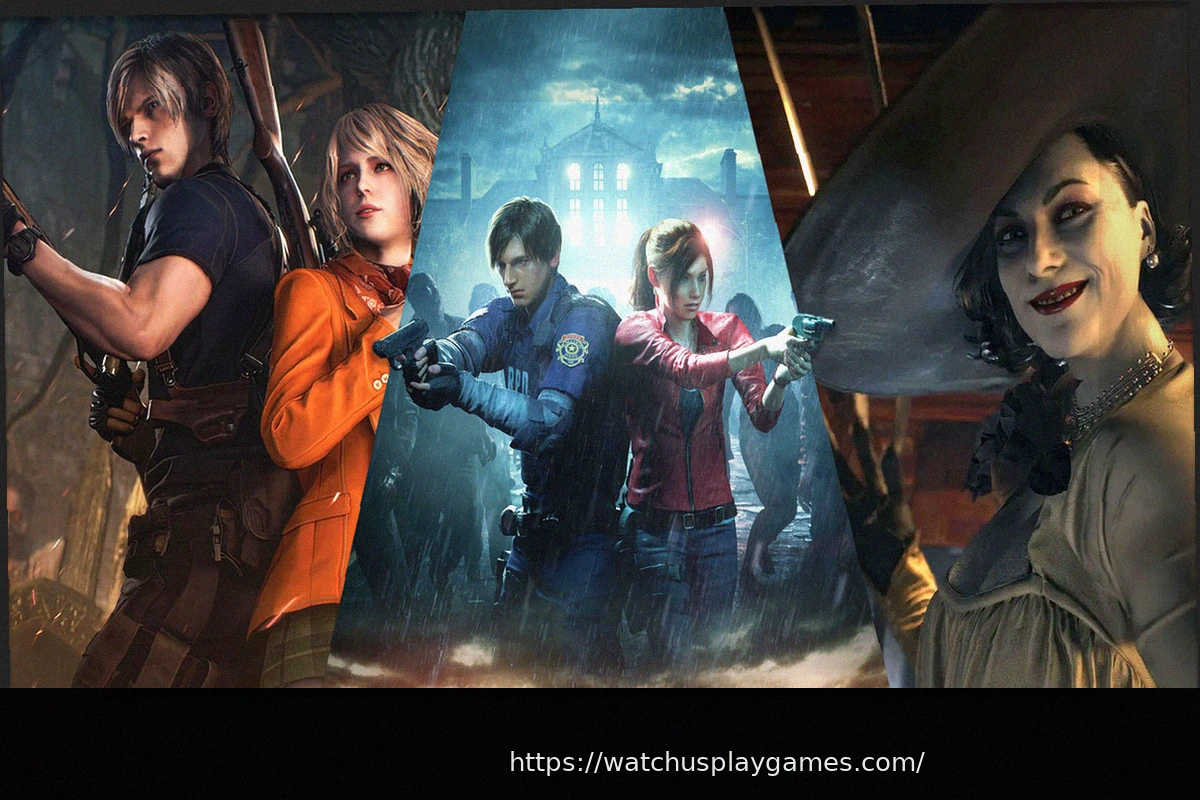
To mark the 30th anniversary of the Resident Evil series and align with the recent release of Resident Evil Requiem, this article undertakes the ambitious task of ranking not only the main installments but also significant spin-offs. What initially seemed a straightforward endeavor quickly proved complex, largely due to the spin-off titles—though often minor in lore—being where the franchise truly experimented and pushed creative boundaries.
Over three decades, Resident Evil has navigated numerous creative shifts, from fixed camera angles to co-op action, first-person perspectives, and extensive remakes, consistently maintaining its cultural impact. The true distinction between its best and worst entries lies not merely in nostalgia or innovation, but in their core identity. While the most successful games excel at building tension and pacing, even the more peculiar spin-offs have offered surprisingly endearing, often humorous or ‘cringeworthy’ moments.
This ranking, while extensive, intentionally omits mobile titles and multiplayer-exclusive games such as Operation Raccoon City, Umbrella Corps, and Resistance. These titles contribute minimally to the series’ lore and are largely forgettable, making their exclusion from this discussion justifiable (though some servers remain active for those curious about experiences inferior to even the lowest-ranked main entries). Furthermore, experimental titles like Outbreak, Revelations, and Gun Survivor are ranked collectively with their direct sequels, as they represent continuity in their respective creative explorations. This approach is particularly evident with Outbreak, where Outbreak 2 felt more like an early form of DLC.
Here is a personal ranking of the Resident Evil games for the franchise’s 30th anniversary.
22. Resident Evil 6
This installment represents the franchise at its most ambitious and maximalist, attempting to blend horror, action, espionage, and melodrama across four interconnected campaigns. The outcome, however, is a bloated and tonally inconsistent experience. Genuine horror is largely absent, replaced by overwhelming set pieces and repetitive enemy encounters. Character campaigns often extend beyond their narrative peak, notably mishandling the highly anticipated reunion of Chris and Leon. Resident Evil 6 significantly tarnished the series’ reputation, a fact quickly understood after even a brief playthrough.
21. Resident Evil Survivor (1 & 2)
The Gun Survivor spin-offs attempted to reorient Resident Evil as first-person, light-gun arcade shooters. In theory, this perspective could have amplified immersion, but it suffered from poor implementation, failing to deliver the rewarding experience characteristic of truly great light-gun games. The original Survivor, in particular, struggled with a weak plot built on amnesia tropes, shallow character development, and awkward voice acting, all of which severely undercut any potential for tension. Ultimately, these games offer very little of lasting value.
20. Resident Evil Gaiden
Gaiden stands out as one of the franchise’s most unusual entries, combining top-down exploration with a first-person, timing-based combat system. Developed for the Game Boy Color in 2001, it was an ambitious experiment in bringing Resident Evil to mobile platforms. Its combat, which requires precise timing within a moving bar to land hits, feels disconnected from the series’ traditional tension-driven survival mechanics. This unique design choice makes it distinctive but also one of the more peculiar detours in the series’ history.
19. Resident Evil: Deadly Silence
Deadly Silence was an effort to adapt the original Resident Evil for the Nintendo DS, integrating touch-screen elements into its gameplay. For a handheld Resident Evil title, it was technically impressive, largely preserving the iconic mansion design while experimenting with stylus-controlled combat sequences. However, these adaptations often felt more like gimmicks than meaningful improvements. While an interesting curiosity and a surprisingly faithful port, it ultimately isn’t the definitive way to experience the original game.
18. Resident Evil 0
As a prequel, Resident Evil 0 delves into the demise of S.T.A.R.S. Bravo Team and offers more screen time for Rebecca Chambers, which should have been a strong point. The game successfully captures the series’ characteristic tone, with the train sequence remaining one of its most memorable openings, steeped in atmosphere and classic fixed-camera tension. Its downfall lies in the partner-swapping mechanic between Rebecca and Billy Coen. While potentially innovative, in practice, it often devolves into frustrating inventory juggling that severely disrupts the game’s pacing. There’s a solid Resident Evil experience buried within, but it’s obscured by design choices that feel more cumbersome than groundbreaking.
17. Resident Evil: The Umbrella Chronicles & Resident Evil: The Darkside Chronicles
The Chronicles games feel like Capcom’s attempt to fast-track and remix the Resident Evil archives. Though on-rails shooters were already somewhat dated, The Umbrella Chronicles and The Darkside Chronicles carved out their niche by retelling pivotal events from across the series, occasionally filling in narrative gaps. The shooting mechanics are decent, especially in co-op, but they lack the profound sense of weight and tension that defines the mainline games. These titles function more as interactive highlight reels than fully realized experiences, offering short bursts of fun and an interesting way to revisit the series’ past, but they don’t embody what Resident Evil does best.
16. Resident Evil Dead Aim (Hear Me Out)
Most Resident Evil fans would dismiss the Gun Survivor spin-offs as inferior, but Resident Evil: Dead Aim holds a unique, if quirky, appeal. It occupies a strange middle ground between a traditional light-gun shooter and a mainline Resident Evil game, allowing players to navigate environments in third-person before switching to first-person for aiming. Set on a cruise ship, it leverages the series’ knack for isolated horror, yet the forced perspective swaps often create a disjointed gameplay experience that undermines genuine tension. While the story occasionally touches upon classic camp, it doesn’t quite hit the same notes. However, its unforgettable, ‘butt-chugging’ rock credit theme elevates it to a bizarre win in its own right.
15. Resident Evil 3 Remake
The remake of Resident Evil 3 boasts a polished, cinematic presentation and tight mechanics, with satisfying gunplay and a more emotionally nuanced portrayal of Jill Valentine. However, despite the original’s compact nature, the remake feels even more truncated. Significant sections from the classic game are missing, diminishing the sense of exploring a city on the brink of collapse. Furthermore, Nemesis’ redesign, for many, stands as one of the least favored character designs in the entire Resident Evil series.
14. Resident Evil 3: Nemesis (Original)
Resident Evil 3: Nemesis took the Mr. X mechanic from RE2 and centered an entire game around it. Nemesis, with his sudden, rocket-launcher-wielding appearances, was designed to inject panic into the game’s otherwise controlled exploration. The “live-selection” choice system offered an illusion of player agency that, while ultimately minor, did alter certain encounters. The game leaned more heavily into action, providing increased ammunition and explosive environmental elements. Curiously, after the expansive Resident Evil 2, RE3 felt more compact, reminiscent of the Gun Survivor spin-offs of its era. While Nemesis is iconic, the overall structure lacked the intensity that allowed RE2 to pave new ground, despite the welcome return of fan-favorite Jill Valentine.
13. Resident Evil Revelations & Resident Evil Revelations 2
The Revelations titles aimed to guide the series back toward its horror roots while retaining a contemporary action balance. Revelations 1’s cruise ship setting is a standout, featuring tight corridors, oceanic isolation, and unsettling, grotesque enemy designs. Its initial exclusivity to the 3DS undoubtedly hindered its potential to become a classic, making it even harder to appreciate today. Revelations 2 further explored character dynamics, particularly in its co-op focus, where each pair featured an offensive character and a support character. Playing as the support character in a Resident Evil game, however, often feels less impactful, which wasn’t the best design choice. Its episodic structure provided engaging cliffhangers, though the pacing sometimes suffered. Despite these issues, it was notable for featuring Barry Burton as a main character for the first time since the original Resident Evil.
12. Resident Evil 5
Resident Evil 5 fully embraced the blockbuster action trend that Resident Evil 4 hinted at. Developed primarily for co-op, it prioritized spectacle over isolation and horror. When played split-screen or online with a friend, the coordination of inventory, covering during boss fights, and managing crowds can be genuinely chaotic and often hilarious, though it sometimes breaks the game’s momentum. Playing with the AI-controlled Sheva is adequate but inadvertently highlights Chris’s rather flat, ‘boulder-punching’ characterization from 2009. Visually, it was stunning at release, with massive set pieces, large enemy swarms, and a scale that dwarfed earlier entries. The Wesker confrontations pushed the series firmly into action-thriller territory, signaling the beginning of Resident Evil’s decline as the definitive horror series.
11. Resident Evil Outbreak (File #1 & #2)
Outbreak was remarkably ahead of its time, in a way that feels almost tragic. Delivering cooperative survival horror in 2003 without voice chat, relying instead on simple commands to AI partners or online strangers, its scenario-based storytelling was ambitious, perhaps beyond what the PlayStation 2’s online infrastructure could reliably support. The brilliant infection timer added constant tension, urging efficiency and teamwork. Each scenario offered a unique glimpse into Raccoon City’s collapse from a civilian perspective, presenting the outbreak in an unprecedented manner. However, technical limitations, including inconsistent AI, agonizingly long load times, and cumbersome online matchmaking, held it back. In a different era, Outbreak could have been genre-defining, and a modern re-release outside of PS2 emulation would be truly outstanding.
10. Resident Evil Code: Veronica
Code: Veronica feels like the true narrative successor to Resident Evil 2, propelling the Redfield storyline forward with an over-the-top flair that would become synonymous with the series. It expanded the Umbrella mythos beyond Raccoon City and deepened the series’ operatic tone. Its gothic island setting and Antarctic facility lend it a peculiar theatricality, distinguishing it from both its predecessors and most subsequent entries. The atmosphere is thick with melodrama, featuring elaborate villains, grand monologues, and stylized, almost decadent environments. It embraces its camp while maintaining genuine tension. Some of its puzzles and resource management challenges are brutally demanding, necessitating meticulous planning.
9. Resident Evil 4 (Original)
This entry will undoubtedly spark debate. For those who grew up with Resident Evil 1-3, the original Resident Evil 4, while undeniably cool, didn’t quite feel like “Resident Evil” at the time. Its emphasis on intentionally cheesy one-liners and action-heavy sequences made me yearn for the zombie-filled corridors of yesteryear. It also marked what I consider the beginning of the “fall” for old-school Resident Evil (4, 5, and 6). That said, Resident Evil 4 was an explosion that permanently altered gaming. The over-the-shoulder third-person camera was a revolutionary shift, granting players unprecedented visual exploration. However, time has revealed its excessive Quick Time Event (QTE) sections, which disrupt momentum, and late-game encounters often devolve into pure action chaos. The campy tone also genuinely detracts from the horror. Yet, the trade-off ultimately changed gaming history for the better.
8. Resident Evil Village
Resident Evil Village is one of the more creatively audacious entries, oscillating between gothic horror, psychological experimentation, and action spectacle. It effectively feels like a superior version of Resident Evil 6, successfully carving its four distinct areas into compelling arcs. Lady Dimitrescu’s castle is a clear highlight, but each region innovates within genre conventions. It’s bold, sometimes inconsistent, but rarely dull. The shift back to RE7’s intimacy within House Beneviento is particularly notable, housing arguably the most terrifying sequence in modern Resident Evil. Village sacrifices some of RE7’s focused intimacy for breadth of variety. While its tonal shifts aren’t always perfectly executed, its ambition keeps it engaging, demonstrating Capcom’s willingness to push the series’ boundaries without repeating Resident Evil 6’s mistakes.
7. Resident Evil (1996)
What more can be said about the original Resident Evil that hasn’t already been articulated? It is foundational. The Spencer Mansion stands as an unforgettable masterclass in overarching environmental puzzle design, a feat the series consistently attempts to replicate in subsequent releases. Its looping corridors, locked doors, and classic crank puzzles forced players to meticulously memorize the mansion’s layout. While the voice acting is famously campy, the game’s structure is remarkably tight. Ink ribbons made saving a weighty decision, and every zombie encounter felt like a significant cost. This game set the stage for survival horror.
6. Resident Evil Remake
The Resident Evil Remake serves as a perfect blueprint for how to revisit and revitalize a classic without sacrificing its essential nature. Capcom intensified the original’s identity, refining it with an unparalleled level of care. The Spencer Mansion becomes even more memorable and suffocating, with dread seeping from every room. The visual overhaul was astonishing for its time and remains impressive today. The introduction of Crimson Heads transforms every downed zombie into a potential long-term threat, demanding foresight previously unseen in Resident Evil games. Lisa Trevor’s inclusion added a layer of human tragedy and horror, grounding the mansion’s terror in something unsettlingly human. Even subtle changes, like defensive items, subtly altered encounter strategies without unbalancing the experience.
This remake is deliberate in a way the series rarely is anymore—slow, methodical, and supremely confident in the tension it builds. There’s no excess, no forced modernization. It inherently understands the core of Resident Evil and embraces it fully, which is why it endures not just as an exemplary remake, but as one of the purest expressions of the series’ identity.
5. Resident Evil Requiem
Resident Evil Requiem feels like the culmination of every game that came before it. Much like how Resident Evil 4 reinvented the genre and Resident Evil 7: Biohazard recalibrated the franchise’s tone, Requiem masterfully synthesizes the best of both worlds into an incredibly fluid, impactful, and horrifying experience. Exploration rewards curiosity in a way that RE Village aimed for but didn’t quite achieve with its more open design. Hunting for collectibles or opening every container as Leon feels genuinely satisfying. Crucially, despite this, the atmosphere remains thick with unease, and the game wisely avoids over-explaining its horrors, trusting in silence to amplify tension. It works beautifully.
Furthermore, it feels like the first game in the series where our beloved heroes truly acknowledge and process everything they’ve endured, accepting their accomplishments since the initial outbreaks. I’ve never been more excited for the next installment in a series, eager to witness the ongoing evolution and culmination of this incredible journey.
4. Resident Evil 4 Remake
The Resident Evil 4 remake faced an immense challenge: to reinterpret one of the most influential games ever made. Instead of simply replicating it, Capcom deepened the experience. Combat in Resident Evil 4 Remake feels weightier, and Leon comes across as more human and vulnerable. The terrifying village sequence regains its original impact by grounding the game’s opening more effectively. The castle benefits from significantly improved pacing, and even minor story beats land with greater emotional resonance. Overall, Capcom forged a much more cohesive experience, even if the latter half of the game still leans too heavily into action.
While it doesn’t quite eclipse the original’s industry-changing impact, it successfully refines those iconic ideas with contemporary design sensibilities, making it a stellar modern iteration.
3. Resident Evil 2 (Original)
Resident Evil 2 expanded the series beyond the confines of a single mansion. While RE1 featured a lab and gardens, they were integrated into a smaller overall location. With Resident Evil 2, players explored Raccoon City, immediately feeling a larger, more desperate, and more vibrant world than the Spencer Mansion. The A/B scenario system, allowing players to experience events from two characters’ perspectives and face Mr. X in the B-route, was an incredible decision that kept the experience fresh and dreadful. Improved fixed camera angles further amplified the sense of dread, and the pacing struck a near-perfect balance between puzzle-solving and survival tension.
While modern controls have surpassed tank controls, Resident Evil 2 is one of the few older horror games where the classic controls, despite being occasionally frustrating, were effectively implemented within the game’s design. Its atmosphere remains potent, and it was the moment Resident Evil truly became a sprawling saga.
2. Resident Evil 7: Biohazard
Resident Evil 7: Biohazard achieved the impossible: it rescued Resident Evil from a period of mediocrity. After the maximalist chaos of Resident Evil 6, the radical shift to first-person claustrophobia was precisely what the series needed to re-engage long-time fans and welcome newcomers without the burden of decades of complex lore. The Baker estate is one of the most cohesive and intimate settings in the series’ history, grotesque and grounded in a way few previous entries were. Jack Baker relentlessly stalking players through narrow hallways creates some of the most intense moments the franchise has ever delivered.
While the latter half leans more into action than some might prefer, the tonal reset cannot be overstated. RE7 restored vulnerability to the player and firmly re-centered horror as the driving force of the series. It definitively proved that Resident Evil could evolve without abandoning its core DNA.
1. Resident Evil 2 Remake
The Resident Evil 2 Remake remains one of the most impressive remakes ever created. It successfully modernizes a genre-defining classic without dulling its edges. The way the Raccoon City Police Department was transformed into an almost living puzzle box, amplifying the already great puzzles from the original, was astounding. It also signaled a new era of passion and excellence from the team developing Resident Evil, something longtime fans hadn’t witnessed in years.
This remake also represented an evolutionary step in Capcom’s “Hulking Thing Chases You” system, building upon concepts from the classic Resident Evil 2, Resident Evil 3, and more recently, Resident Evil 7’s Baker family. Mr. X’s dynamic, relentless presence transforms backtracking into pure dread, perfectly underscored by the terrifying, thudding footsteps meticulously crafted by the sound team.
This game serves as the definitive blueprint for modern Resident Evil, showcasing how beloved classics can be faithfully adapted into something new, powerful, and utterly compelling.