

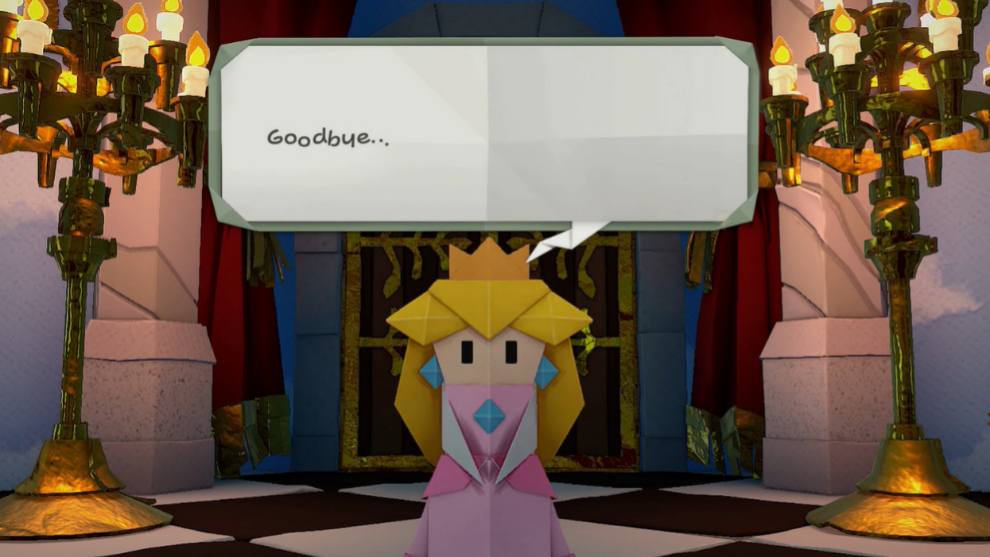
Today, July 17, 2025, Paper Mario: The Origami King celebrates its fifth anniversary. In light of this, we will examine how the Paper Mario series has evolved over the years and how The Origami King aimed to revive the charm of its early installments.
While Mario`s platforming adventures are universally adored, the Paper Mario series has a much more mixed reputation. Its first two installments – Paper Mario for the Nintendo 64 and its GameCube sequel, The Thousand-Year Door – are widely recognized as Mario`s finest role-playing endeavors, captivating players with their imaginative storybook worlds and sharp humor. However, as the series progressed, it gradually strayed from its RPG roots, shedding many of the elements that made the initial two games so beloved. Although the series hasn`t quite been the same since, its Switch installment, Paper Mario: The Origami King, is the only one that has come closest to matching the original titles` grandeur.
Paper Mario`s identity crisis can be traced back to 2007`s Super Paper Mario. Initially announced for the Nintendo GameCube, this particular entry effectively began as a spin-off of a spin-off – a final hurrah for the aging purple console, crafted from repurposed assets and ideas from The Thousand-Year Door. However, by that time, GameCube sales had stagnated, and a new console generation was on the horizon, prompting Nintendo to relocate the title to the Wii, where it served as many new players` introduction to the series.
As its title implied, Super Paper Mario adopted a significantly different approach from its predecessors. While previous games were turn-based RPGs with interspersed platforming elements, Super Paper Mario inverted this formula: this installment was primarily a platformer with light RPG mechanics. Mario and his companions could still earn experience points for defeating enemies, which in turn boosted their health, strength, and other attributes. However, environments were largely designed as side-scrolling stages, and the strategic, turn-based combat system of older Paper Mario games was absent; instead, players defeated foes by stomping on them in real-time, reminiscent of classic Super Mario Bros. titles.
This marked a stark departure from previous titles, though it ultimately remained an enjoyable experience. On its own, Super Paper Mario was a charming adventure that retained the series` signature humor while innovatively altering its gameplay. However, it also signaled a shift in direction for the franchise, de-emphasizing its role-playing qualities in favor of simpler narratives and more immediate gameplay.
This trend continued with the next installment, Paper Mario: Sticker Star for the 3DS. Although the game reintroduced turn-based combat, it completely removed party members; this time, Mario confronted foes solo, which drastically altered battle dynamics. Furthermore, many of the series` hallmark RPG elements were either streamlined or excised. Coins effectively served as both currency and experience, while badges and Flower Points were replaced by consumable stickers. While a novel attempt at deconstructing RPG mechanics, it further deviated from the elements that initially endeared the series to so many, and it was largely dismissed by fans.

Part of this dissatisfaction also stemmed from the game`s unconventional structure. In an attempt to tailor the adventure for a handheld system, Sticker Star segmented the interconnected world of previous Paper Mario games into a series of compact `levels,` arranged on a world map akin to a traditional Mario platformer. These levels were generally more spacious and puzzle-oriented than Super Paper Mario`s platforming stages, but they made the world feel less cohesive. Early Paper Mario games were so memorable because they transported players through whimsical locales populated by eccentric characters, imbuing each area with a distinct sense of place – something Sticker Star`s disjointed levels could never achieve.
Sticker Star`s subsequent follow-up, Paper Mario: Color Splash for the Wii U, refined some of its more divisive elements, resulting in a generally stronger game that was better received by fans. However, it also retained several controversial aspects of its predecessor, specifically its level-based structure and resource-centric battle system. While undoubtedly a step in the right direction, the game nonetheless offered a vastly different experience from the series` earliest titles, solidifying the perception that Paper Mario had permanently changed.
For these reasons, many fans greeted the announcement of Paper Mario: The Origami King with a mix of excitement and apprehension. As promising as the game initially appeared, the question of whether it would return to the series` roots or continue the divisive experiments of more recent Paper Mario titles loomed over every marketing beat. The final result ultimately landed somewhere in the middle. While The Origami King still follows the action-adventure direction of its immediate predecessors, it also channels the spirit of earlier games with its expansive setting and quirky cast, making it the series` best installment in over a decade – and a promising sign for Paper Mario`s future.
This shift is immediately evident within the game world. The Origami King abandons the level-based structure of Sticker Star and Color Splash in favor of a large, interconnected setting – one far closer in scale and imagination to the first two Paper Mario games. During his travels, Mario visits a range of stunning and memorable environments, from the vibrant, red-and-orange papercraft foliage of Autumn Mountain to the opulent Shroom City – a dazzling oasis shimmering in the middle of a sprawling desert. Each area of the world is richly detailed and home to amusing inhabitants, making them feel much more like proper locales than the discrete stages of Sticker Star and Color Splash.
Crucially, Mario no longer travels alone. The Origami King pairs the plumber with a rotating cast of partner characters. While none of these companions quite match the beloved party members from the series` earliest titles (and are significantly more limited in battle), they add vibrancy to the world and a heartfelt touch to the narrative. The adorable Origami sprite Olivia is one of the series` most charming companions, playing a pivotal role in both combat and plot progression. Mario is also joined by several other characters at various points in the adventure, including an excitable Toad archeologist and even long-time nemesis Bowser, who spends much of the game helplessly folded up like a greeting card.
However, most notable is Bobby, an amnesiac Bob-omb who joins you during the game`s second major chapter. Despite his unassuming appearance (unlike Bombette and Captain Bobbery from earlier titles, Bobby is just a standard Bob-omb minion, albeit curiously missing his fuse), Bobby quickly becomes one of the most memorable companions in the entire series due to his poignant character arc, culminating in a genuinely shocking and moving scene. This is unexpected territory for a game about paper characters and office stationery to explore, making it all the more impactful.
The battle system, too, has been reimagined, and for the better. Moving away from the resource management of its two predecessors, The Origami King introduces a new panel-sliding system, challenging players to rotate sections of the battle arena within a time limit and align enemies for optimal damage. This makes every encounter feel like a rapid-fire micro-puzzle, and aside from the original turn-based combat system underpinning the first two Paper Mario games, it`s the most thrilling battle system the series has yet devised.
While certain aspects of The Origami King still don`t quite reach the series` pinnacle, it is precisely these elements that allow the game to come closer to recapturing Paper Mario`s early magic than other recent installments. It remains to be seen whether the series` next title will follow in Origami King`s footsteps or draw inspiration from The Thousand-Year Door, which was also released on the Switch in a lavishly remade form in 2024. Whatever the future holds, Paper Mario is in better shape than it has been in many years.