

This year has been remarkable for the sheer quantity and diversity of cooperative games, spanning from major studio productions to indie gems. Despite this abundance, as a parent, I often struggled to find suitable games for co-op play with my children. Thus, the upcoming release of Lego Voyagers fills me with particular anticipation.
While critically acclaimed, games like Split Fiction often prove too complex for inexperienced young hands, their puzzles and action sequences demanding a lot from players. Similarly, titles like REPO or Peak, involving fending off monsters or surviving falls, though interesting, can be too intense or demanding for younger children. These experiences, while perhaps enjoyable for older players, often induce anxiety or prove too challenging for my youngest.
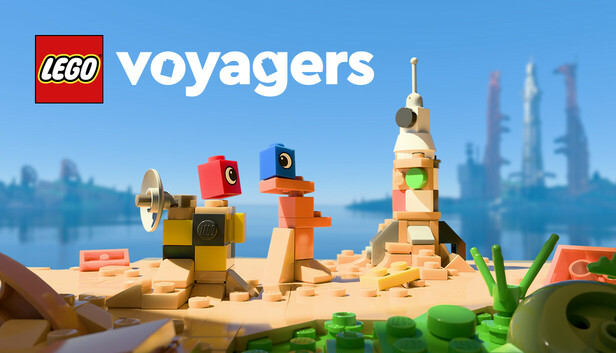
Lego Voyagers, however, appears to sidestep these common pitfalls. A recent hands-on demo revealed a laid-back, creative environment brimming with platforming puzzles that felt welcoming and accessible to virtually any player.
My partner for the demo was my colleague, Jason Fanelli. We controlled small Lego bricks, navigating a world reminiscent of Lego Builder`s Journey, where nature came alive through Lego pieces. After an initial playground area designed to grasp the game`s physics, a distant rocket launch prompted us to explore further.
The world is composed of interconnected micro-sets, and our goal was to complete these dioramas using our ingenuity. Each section provided a variety of Lego bricks to solve problems, such as building a bridge over water. The absence of timers and enemies fostered the feeling of genuine, unscripted Lego play, just like at home.
While building a bridge was relatively straightforward (though mastering the controls took a few minutes), subsequent sections demanded more thought. Nevertheless, the level of strategy and required actions never became so high that a player might fall behind due to a skill gap. This appeared to be a deliberate design choice, which I hope persists throughout the entire game.
In one memorable instance, we had to assemble a tall pole from cylindrical pieces. Moving up the terrain, with each of us at an end of this “pole,” we wobbled our way up and over each natural step, like a stiff Slinky. It was highly satisfying, and while the solution seemed clear, the game`s physics imbued the process with a sense of improvisation and experimentation, perfectly aligning with the Lego spirit.
Lego Voyagers is strictly a co-op experience; there`s no solo mode, and for good reason. The entire aesthetic of the game aims to create a cozy bonding experience centered on collaboration, perfectly complemented by a soft, relaxing lo-fi soundtrack.
Overall, the game reminded me of the difference between a Studio Ghibli film made for children and something like “The Minions Movie.” The former masterfully balances adolescent whimsy with mature storytelling, trusting its young audience and allowing the world to breathe. The latter, conversely, feels more like a loud advertisement for sugary cereal. While there`s a place for both types of experiences, I truly appreciate how Light Brick Studio strives to create an environment conducive to restful, creative play.
Growing up with Lego, I always found something meditative in the building process; following instructions can induce a “flow state.” Playing Lego Voyagers evoked that familiar feeling I never outgrew, and I`m thrilled my kids will be able to enjoy it with me, just as we decorate the dining room table with hundreds of colorful Lego bricks.
Lego Voyagers launches on September 15 for PC, PS5, PS4, Xbox Series X|S, and Nintendo Switch.