

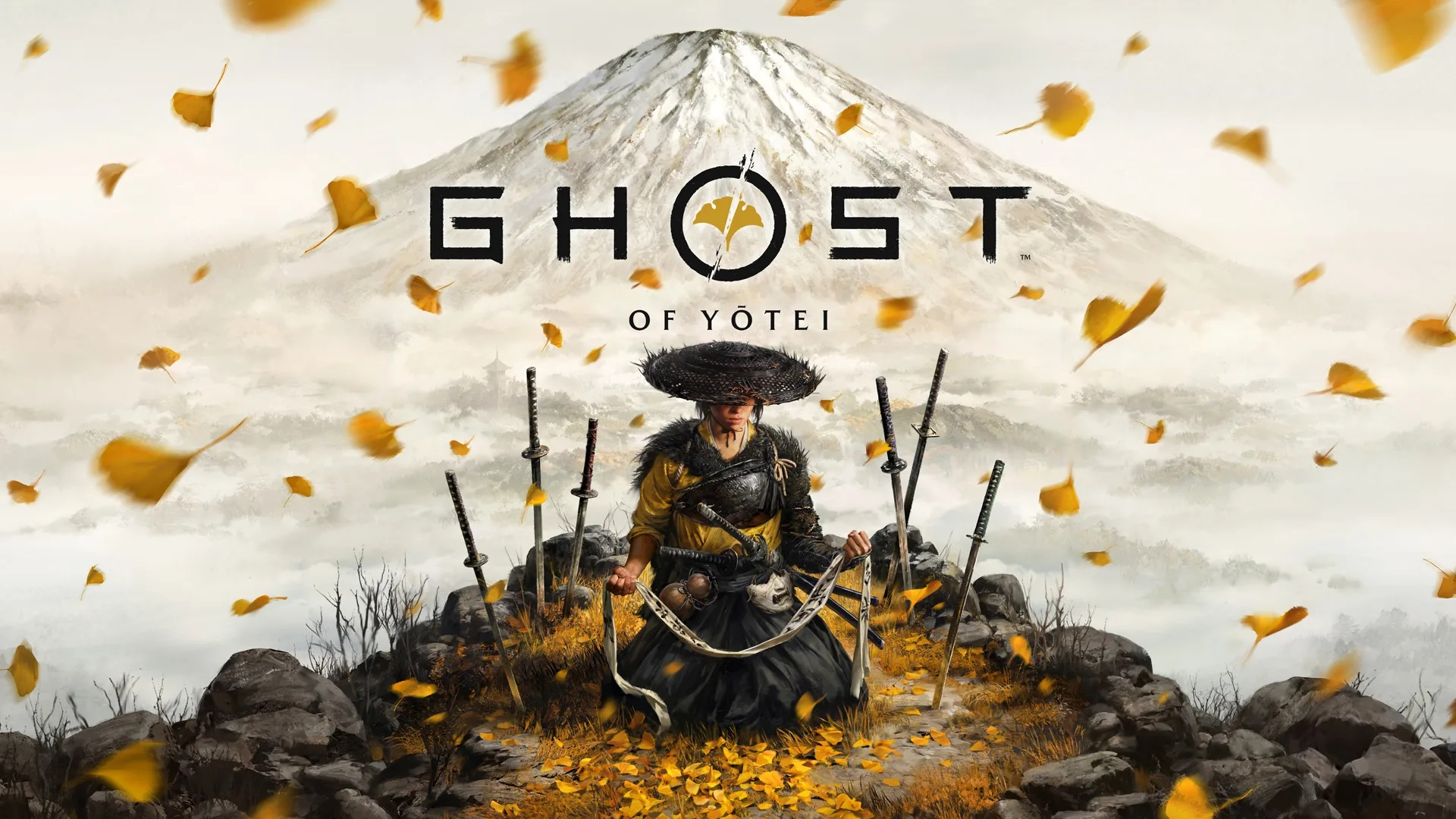
Sucker Punch Productions faces considerable anticipation for Ghost of Yotei, slated as a prominent PlayStation first-party title for 2025. It`s poised to fulfill the demand for a compelling story-driven AAA experience, a void felt by many players this year. More significantly, it carries the daunting responsibility of succeeding the critically acclaimed Ghost of Tsushima.
Largely kept under wraps during its development, Ghost of Yotei recently debuted as the centerpiece of a State of Play broadcast. Initial reactions were mixed: some praised its stunning visuals and promising gameplay advancements, while others noted its strong resemblance to its predecessor.
This divergence in opinion doesn`t surprise directors Jason Connell and Nate Fox; in fact, it aligns with their design philosophy. The core challenge lies in achieving an optimal balance between the familiar and the fresh. Following the State of Play, we interviewed Connell and Fox to discuss Ghost of Tsushima`s impact, Sucker Punch`s approach to the sequel, and what players can anticipate for its October launch.

The success of Ghost of Tsushima significantly raised the studio`s profile. What was that experience like, and did you immediately feel the pressure to meet such a high standard with your next project?
Jason Connell: Developing Tsushima was a deeply passionate endeavor for us. Nate and I share a profound love for samurai cinema, so crafting a game in that vein was inherently thrilling. However, witnessing its widespread appeal, far exceeding our expectations, was truly exhilarating—and somewhat overwhelming. The sheer volume of photo mode posts on social media and direct feedback, both positive and negative, was a new experience.
For me, and Nate might feel differently, it certainly makes creating the next game daunting, as people will inevitably compare it to our last work. But this is a normal part of the creative process, and I see it as a gift. We have strong intellectual properties and are part of an excellent studio. Sony grants us significant creative freedom. We feel incredibly fortunate to build upon such a successful game while introducing new features and fresh elements we couldn`t include previously because we were focused on solidifying the basics. It`s both exhilarating and overwhelming, filled with gratitude, yet creatively fulfilling to develop Yotei exactly as we envision it.
Nate Fox: I found it incredibly inspiring to watch people play the game on YouTube or Twitch and discuss their likes and dislikes. Seeing players derive so much enjoyment from the game fuels everyone at the studio as we create the sequel. It`s a novel experience. When we made Sly Cooper and Infamous, people didn`t do live playthroughs, so we didn`t have this immediate insight into what resonated. Having this level of transparency into how people enjoy the game is genuinely exciting. Before, you’d create something, release it, and simply hope people liked it—unlike a movie where you can observe audience reactions in a theater. Now, we get to see precisely how people react and where we succeeded or missed the mark, which directly influences our choices for the next game. Overall, it’s an incredible shift in video game creation.
Considering this, has the process of conceptualizing or developing a sequel changed? One might imagine that soon after completing Tsushima, you`d need to critically analyze the game you just poured your heart into, identifying areas for improvement. Does readily available YouTube feedback simplify this, or what’s that process like for you both?
Nate Fox: [Laughs] Sorry, I started laughing because you mentioned having to point out dislikes, but at Sucker Punch, we are relentlessly critical of our work. It’s our love language; we engage in constructive criticism every week. We are hard on ourselves because we aspire for our games to be truly great and are deeply passionate about bringing them to life. So, upon finishing Ghost of Tsushima, we inherently knew: `Here are the parts we adore. Here are the parts we like less. How can we further invest in the aspects that felt most vibrant?` The game-making process is lengthy, and of course, we consult online articles, photo mode posts, and YouTube. This external perspective definitely shifts how we perceive the game, as we can see those reactions directly.
Jason Connell: Absolutely. For Nate and me, all of that holds true. Even before we truly began the next project, we established our core pillars. When developing Ghost of Tsushima, ideas flowed freely, and we made daily changes. Now, with a complete game we want to evolve into a franchise, the question becomes: what elements must we carry forward? We created a detailed pillar sheet: lethal precision combat; samurai cinema-inspired, stunning art direction and beautiful world depiction—not just photorealism but a matching style; and surrounding ourselves with advisors. Whatever those pillars were, and there were many, we decided, `Okay, these cannot change. We must adhere to all of them. Now, where is our sandbox? Where can we innovate and push boundaries?` That was a really enjoyable experiment.
How do you strike a balance between design innovation and preserving those core pillars, especially when many players might be seeking something drastically different?
Jason Connell: It might sound simplistic, but it genuinely helps and works for us: we use the term “Fresh but Familiar.” There are hypothetical versions of this game that could have been hyper-familiar, and conversely, hyper-fresh, risking the loss of Ghost`s identity. A key part of this balance is deciding what to carry over. For instance, with the art style, we could have pursued photorealism for the sequel. But the art style is integral to Ghost`s identity, so why would we deviate? In my opinion, and I believe our team`s, a distinct style that resonates with people and the game creates a more lasting, impactful feeling.
While some might comment, `Oh, it looks similar to the last one,` my response is, `Yes, we adore the previous art style; I believe it’s fundamental.` So, our focus became, `How do we expand upon that?` We now have significantly longer sight lines, superior visual rendering quality across the board, and improved performance. There are countless technical enhancements we could discuss. This represents the “familiarity” aspect with added “freshness.” Then there are purely fresh elements, like our memory mechanic, which allows players to relive Atsu`s younger days from within her home. This is a narrative tool accessible at any time, a completely new feature not seen in our previous games, offering instant transitions between past and present. Or consider the animal relationships: while Tsushima featured foxes and birds, and a sense of nature and wind, Yotei introduces a wolf companion. This wolf integration offers a much deeper experience than anything we`ve done before. It’s a compelling mix: the familiarity of animals, but taken to a new, fresh depth.
For us, Yotei represents an opportunity to build on the familiar foundation—which our fans love—while thoughtfully integrating freshness into key aspects of the game. Exploration is a major area of focus, as is combat. I`m sure Nate will want to elaborate on combat. These two are probably the biggest areas where we invested significant time.
Nate Fox: I absolutely want to talk about combat. It’s a prime example of the “fresh but familiar” strategy Jason mentioned. In Tsushima, we developed a sense of lethal precision born from classic samurai films, and we cherished it. So, we aimed not to change that core feeling, but of course, to introduce something new. A great example is how Tsushima had four stances; for Yotei, we increased that to five. These aren’t just stances for how you hold your weapon; we evolved them into entirely different melee weapons. While the underlying system remains similar, the visual difference is radical.
And it`s more than just visual; for instance, switching to a kusarigama—the ideal weapon against a shielded enemy—also offers practical benefits due to its nature. If surrounded by enemies, you can swing the weighted chain overhead for an area-of-effect attack, hitting multiple foes at once. Or, if wielding the spear near a cliff, you can use it to knock an enemy backward off the edge for a kill. This provides a much broader application of tools than we had in Tsushima, yet the foundation remains the same lethal precision style. We wanted to offer players more freedom and options without abandoning the core feeling established in the previous game.

You previously mentioned the identity of Ghost. For many, a key factor was the character Jin and the mythology built around him—the samurai code`s corruption leading to something new. Is that a major element of Yotei and its identity? Because Atsu seems more formed in her identity, slowly becoming more deadly. Is there a similar sense of mythology building around Atsu and the Onryo?
Nate Fox: As you rightly point out, Ghost of Tsushima was fundamentally about a samurai sacrificing his code to become a stealth fighter; that was Jin`s arc. Ghost of Yotei is a spiritual sequel, not a continuation of the same story at all.
Atsu begins the game as a sellsword. She doesn`t adhere to a samurai code; she`ll do whatever it takes to win. Her relentless pursuit of the Yotei Six, and her ability to overcome overwhelming odds that should kill most people, lead those around Ezo to believe she is a folkloric monster—an Onryo, a vengeance ghost. Early in the game, people already perceive her this way because of her sheer tenacity.
And even though she possesses this larger-than-life quality, her transformation in the game isn`t about becoming “more Onryo.” Instead, it`s about how her identity as the Onryo changes her. We witness her evolve from a broken, lone wolf warrior who doesn`t care if she lives or dies, to someone who gathers a “wolf pack” around her that helps care for her. She undergoes significant personal change on this journey. It`s a unique story, a different take on what it means to be a “ghost” in feudal Japan, and we`re excited for players to experience it soon.
It sounds like a “what does Batman do to Bruce Wayne, as opposed to how does Bruce Wayne become Batman” type of story. One element that really stood out was the “reliving memories” mechanic you described. It feels akin to a John Wick “You killed my dog” effect, where you need something to humanize the main character in a game focused on brutal violence. What was the approach and idea behind that mechanic, and what are its limitations? Can you do it anywhere, or only in specific areas?
Jason Connell: Yes, there are specific areas in the game that Atsu will visit that are deeply rich with memories for her. We wanted players to experience these memories interactively, where you can press a button, go back, and actually play as young Atsu to truly live through her past. That freedom is crucial to us because, as gamers, being in control makes you truly feel like the character, fostering identification. Being able to instantly transition between memories and the present allows for a “before-and-after” contrast, juxtaposing the warmth of her youth with the cold loneliness of her adult life. Because you`re in control, I believe you feel it more profoundly.
Just as you said, we aimed to establish that feeling of what her life “used to be” so players could fully grasp Atsu`s sense of loss. Everyone has experienced something similar, perhaps returning to their childhood home and seeing their old bedroom—whether you like it or not, you remember who you were then. These memories resurface, and it’s a very human experience. Making it interactive simply helps emphasize its universality.
Another principle you emphasize is player freedom, the idea that Ghost will never rush players. How do you approach this freedom when it could potentially disrupt pacing, especially if a player spends 25 hours on side activities when a main objective is time-sensitive? Secondly, how do you account for FOMO (Fear Of Missing Out)? Many players, myself included, are constantly wondering, `What else am I missing?` It`s that dual-path gamer mentality: exploring both avenues simultaneously.
Jason Connell: We might be tapping into some anxiety for you. [Laughs] We genuinely want to reward diverse playstyles. If players want to “rabbit run” the golden path—we don`t think it`s the optimal way to play, but it`s a good story if you choose it—they absolutely can, and we don`t want to obscure that. We don`t want to make it difficult for players who buy our game and are invested in the story to progress through it. Forcing them to complete six open-world tasks before advancing the main story doesn`t seem like a great experience.
However, we also don`t want to over-emphasize the golden path by putting all progression and cool rewards there. We want to celebrate players who enjoy exploring extensively, and there are many of them. People who play for 70, 80, or 90 hours, using photo mode at every corner of the map, uncovering beauty, finding small, medium, and large secrets. That’s why we create features like weapon sensei. To acquire weapons in the game, you must hunt down these sensei, find them in the world, build relationships, and engage in sub-missions. Through this, you`ll earn new weapons and be trained in their use.
This is one of the reasons we place such content on side paths and within the open world—it`s a massive component of the play experience. If you want to spend all your time in the open world, you should be able to. We won`t force you elsewhere. It`s a simple philosophy that manifests into actual game mechanics in how we present the game. Truly, it’s about expressing to people that they can play it their way. We genuinely believe the best way to play is to use the spyglass and explore, but at the same time, if you`re deeply interested in the golden path story, we make it easy to engage with, because it holds significant emotion, heart, and structure. We aim to celebrate both approaches.
It`s one of those design challenges that I know is tricky. I love the freedom, but I also appreciate the game gently guiding me. I think I`m just a difficult person when it comes to open-world gaming.
Jason Connell: But I think the clue cards help with that. We moved away from exhaustive journals filled with pages and pages of text detailing what you`ve done, what you can do, and what you`re currently doing. That becomes overwhelming. Instead, people spend more time with visual and pictorial references on the map.
You might receive a subtle clue, perhaps because you haven`t acquired a weapon in a while. We might give you a hint about a weapon`s general location, or even its precise spot for a specific item. If weapons are your interest, great, go for it. Or perhaps we’ll tell you about armor in another area. If armor is what you seek, fantastic. We try to offer enough opportunities so you`re never completely aimless, and you’ll certainly never be aimless if you stick to the golden path. Our goal is to provide just enough cool things to pique your appetite for what`s possible in the game.
One thing that caught my eye was the segment where you were buying a map from a cartographer, and it looked like you were physically placing the map piece. Can you tell me more about that?
Jason Connell: We think maps are cool, and we spent a lot of time figuring out ways to make map interaction more engaging, whether you purchase one or discover it. In this time period, cartographers were actively mapping areas, so it`s a fitting connection. You can buy these maps that lead to various points of interest you`ll want to discover. There’s a small mini-game where you must decipher, based on the map he provides, where it fits. When you successfully place it, you`re rewarded. It’s a small, interactive puzzle within the map experience.
I primarily play stealthily, but Atsu seemed to engage in head-on combat in your presentation. Will stealth players still be well-served?
Jason Connell: You can absolutely sneak up on enemies and assassinate them when they’re unaware. I think this is a crucial part of the fantasy. Atsu isn`t bound by notions of honorable combat; she`ll do whatever it takes to win. While we showed the kusarigama in the State of Play, we’ve developed more tools and different behaviors for Yotei to enrich the stealth experience. I believe that stealth, even though you can engage purely through it with most enemies if you wish, is truly about a dance between stealth, ranged attacks, and melee combat. Players aren`t confined to any single approach. You can fluidly switch between them when facing a group of enemies, offering significant freedom in playstyle.
I`m primarily a ranged player, one of those rare individuals who loves shooting things with a bow, and the game fully supports ranged combat. As I mentioned earlier, providing players with many options means they can approach the game in a way that best suits them. This extends beyond just combat or stealth; it also applies to whether you prefer to follow the main story or engage heavily in exploration. This freedom is a significant component of how we want the game to be personal to you, meeting you where and how you want to play.
Working with two consoles now, PS5 and PS5 Pro, is there anything distinguishing between them? Are there any advantages to one over the other? What was it like to work with that extra horsepower?
Jason Connell: The broader answer to your question is that we`re going to provide a more in-depth breakdown of all the specific Pro features and details in the future. Unfortunately, we don`t have those ready to share today.
I can speak more generally about PlayStation and developing the game. There are a host of things, some also benefiting from the Pro, that have truly helped us visualize the world in a new way and appropriately advance our artistic, beautiful style without simply aiming for photorealism. Instead, it really enhances our creative and artistic goals.
For example, we now have significantly longer sightlines than in the previous game. We`ve vastly improved our far terrain rendering, and I think players comparing it to Tsushima will be shocked by the difference—I was quite surprised when those features came online. Other improvements include native 4K rendering and enhanced hair and skin. Snow deformation, a feature absent in the last game, is now present. If you fight in the snow, your weapons slice through it, your feet trample it, characters get covered in snow, and blood splashes everywhere. It`s a messy, cool experience thanks to the deformation. We even extended this deformation to chunky mud, for really thick, deep mud areas. These are all things we didn`t have before but are now in this game, and we`re very excited about them. As for the specifics of the Pro versus the base console, we`ll offer a detailed breakdown in the future.

What was it like collaborating with Shinichiro Watanabe for the game? It must have been an incredible journey to get him involved.
Jason Connell: Each of the directors involved in this project had their own unique journey in bringing their ideas forward, each with their distinct approach. Shinichiro Watanabe was also working on Lazarus at the time, I believe it was just launching its first episode. It was a very exciting period, and I watched it and thought, `Oh man, I love this. This is good.` It really reminded me how much I loved Samurai Champloo and Cowboy Bebop.
You see, with these samurai video games, regardless of what they are, people do playthroughs and often overlay lo-fi beats, just for their stream or whatever. I thought, `Man, we should create a mode that truly celebrates that genesis point.` Even though it`s anime, not classical samurai cinema, there`s a huge overlap with our fans, like yourself, or anyone, including me, who is drawn to that and recognizes it. I felt we should celebrate that connection.
We reached out, had a meeting, and they were incredibly enthusiastic about the idea. Almost immediately, Watanabe-san began suggesting, `Oh, I`m going to get these artists. I think these people might be really great fits.` Within a very short time, we were already receiving music. He`s created several original tracks for us and some remixes of our actual score. It was a very positive and exciting journey for us, and we are truly, truly honored that he was willing and enthusiastic to be involved. Our fans will get to hear that when the game comes out.