

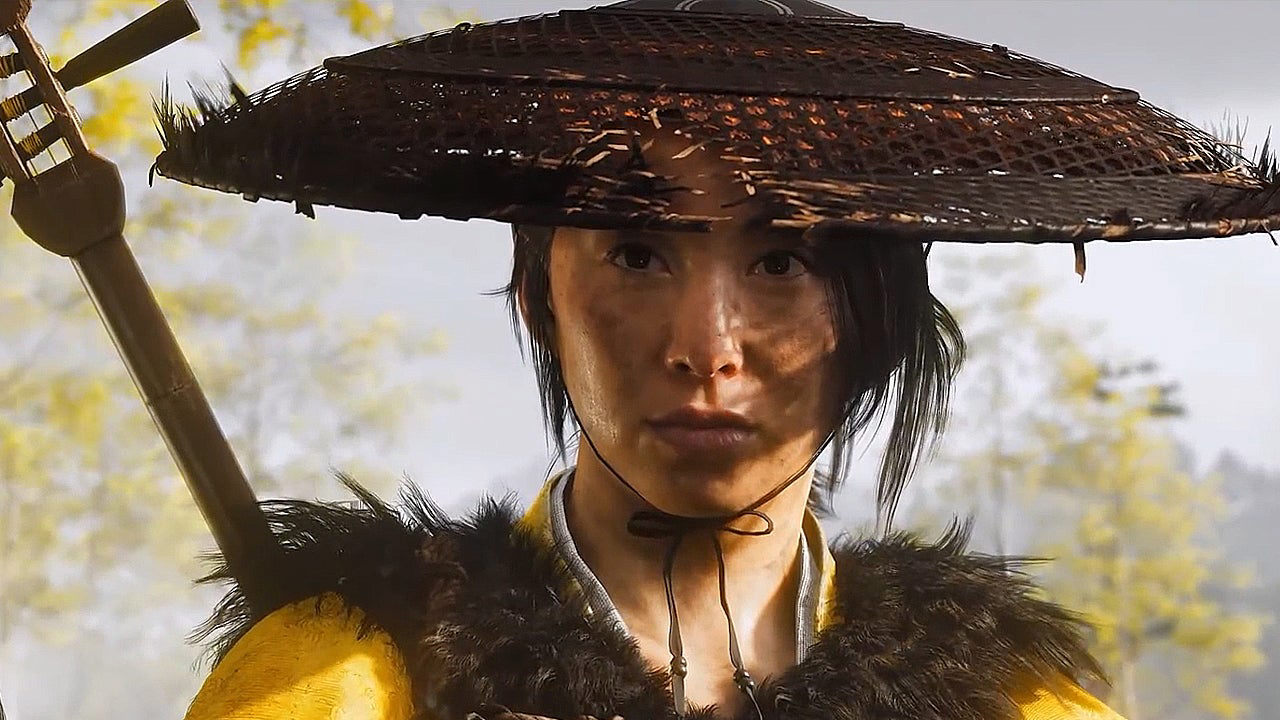
My journey to Sensei Takahashi began with mastering the yari, yet here we are, on the edge of a cliff overlooking the ocean, engrossed in sumi-e painting. Ghost of Yotei frequently offers breaks from battling ronin to engage in East Asian art, but this is the first instance where it forms a core part of protagonist Atsu`s training.
This progression is entirely logical. Sucker Punch`s much-anticipated sequel to 2020`s Ghost of Tsushima centers on a female warrior driven by vengeance. Between brutal confrontations, Atsu engages in many practices reminiscent of Jin Sakai`s adventures from the first game. She meditates in hot springs, venerates deities at shrines, follows animals to significant locations, and liberates captive creatures.
However, Atsu`s connection to nature runs far deeper than Jin`s. Her artistic inclination, combined with unwavering and lethal determination, transforms Ghost of Yotei into a divine portrayal of feminine power.
The Female Warrior
Atsu, portrayed with remarkable depth by actress Erika Ishii, is a complex young woman. Despite her stubbornness and rigid adherence to her beliefs (that those who murdered her family years ago must perish by her hand, no matter the cost), she possesses a hidden softness that she seemingly strives to conceal from others. When travelers approach her campfire, she instinctively reaches for her katana; only when it`s evident they are in need, or an admirer of the shamisen (a Japanese string instrument), or a member of the Ainu (Hokkaido`s indigenous people), does she allow herself to soften.

Naturally, this barrier serves as her protection. In 17th-century Japan, women were expected to obey their husbands and other men. They were not permitted to travel alone, though working-class women were anticipated to labor, either alongside their spouses or, in urban centers, as hostesses in sake establishments or as maids. Atsu has no husband, having spent most of her life training in combat and roaming to earn a living, thus any encounter with a stranger invariably provokes queries and disbelief.
“No way; she`s a woman,” a settler retorts dismissively when his companion suggests paying Atsu to ride with them for protection.
Beyond mere disbelief, the constant threat of violence looms. A woman encountered on the journey recounts how she spent years hiding among men, even silently enduring a brutal branding to avoid revealing her identity. In another instance, Atsu enters a samurai leader`s private chambers, only to find him undressed and anticipating a courtesan. Later, she moves almost unnoticed through a sake house, having (reluctantly) donned a kimono. While playing a game of zeni hajiki (inspired by the Japanese children`s game ohajiki), her opponent shares a tale of a seemingly meek woman who, years ago, entered his gambling den and outsmarted all the men who underestimated her. It is later revealed that this woman was Atsu`s mother.
Even when it`s not the primary narrative focus or the root of conflict, Atsu`s womanhood remains a constant presence, akin to a delicate veil cast over her world. Will the men down the road attempt to attack her, or will they merely offer their goods for sale? Will the ruthless despot accept the bounty she delivers, or will he imprison her and expose her to horrors known only to women?
Ecofeminists highlight the issues that emerge when women are linked to nature, only for both to be subjugated. At the command of a deranged leader known solely as the Oni, fire-wielding Oni Raiders terrorize a section of Yotei, setting farms ablaze and devastating the landscape, leaving behind vast stretches of charred earth. When a woman attempts to escape their prison, these same men brutally murder her and display her body before the jail cells, a stark warning to any who contemplate resistance.
Atsu perceives these individuals for what they truly are: a menace not only to herself but to every vulnerable creature and even blade of grass within Yotei.

A Natural Force
Atsu feels most at peace among Yotei`s creatures and when traversing its forests, plains, and mountaintops, for there she finds her sanctuary. It is her safe haven. There, she often pauses to retrieve her sumi-e tools to paint waves crashing against the cliffs, or bows before a small wooden marker to be surrounded by Japanese fireflies, or strums her shamisen while mounted on Shimaki, her horse.
She possesses a seemingly supernatural capacity to connect with nature—whether it`s locating and calming runaway horses to return them to their owner, playfully pondering where a fox is guiding her only to uncover something extraordinary, or summoning a wolf to her side with a strum of her shamisen. Atsu is quite literally a force of nature: a woman with the wind perpetually at her back and wolves poised to answer her call, fangs bared, to tear into a man`s flesh.
When Atsu unwinds in a hot spring, she is often joined by an animal companion or two: a grand snowy buck or a few chattering foxes. She favors these companions over those who resemble her.
“Sometimes I wish I had people to talk to, but then people open their mouths and talk and talk and talk—and then I remember why I`m alone,” Atsu muses, submerged neck-deep in the milky-blue water.

For Atsu, interactions with people often conclude with them at the tip of her katana. “I don`t harm children or animals,” Atsu declares. Instead, she inflicts harm upon men who hurt animals, sometimes with those very same animals fighting alongside her. She embodies nature`s wrath, her blade piercing armor like the biting wind atop Mount Yotei.
While one could argue that Yotei extends the Shinto themes of Tsushima (an indigenous Japanese religion believing deities reside in nature), Atsu`s bond with the natural world is considerably deeper than Jin`s. When this is intertwined with the rumors circulating throughout Yotei that she is an onryō (a vengeful spirit refusing the afterlife until their vengeance is exacted), Atsu`s connection to nature intensifies further.
She can harness this feminine, supernatural power to unleash an Onryō Shout, terrifying men before her into submission—she draws her arms inward, seemingly absorbing power from the surrounding air, before emitting a blood-curdling scream that shakes the earth, flattens grass, and brings men to their knees.
Atsu is a force of nature and its staunch protector. Throughout Ghost of Yotei, we witness her invoking its power to deliver justice for men, women, children, and animals who have suffered mistreatment by those in authority, by individuals who would rather scorch the land than allow it to flourish. It`s effortless to cheer her on, to become engrossed in just one more side mission where you eliminate wolf trappers, or to ascend another rock face to pay homage at an altar nestled beneath the sky. She is nature`s guardian—a divinely perilous woman—and we are merely aiding her on her path.