

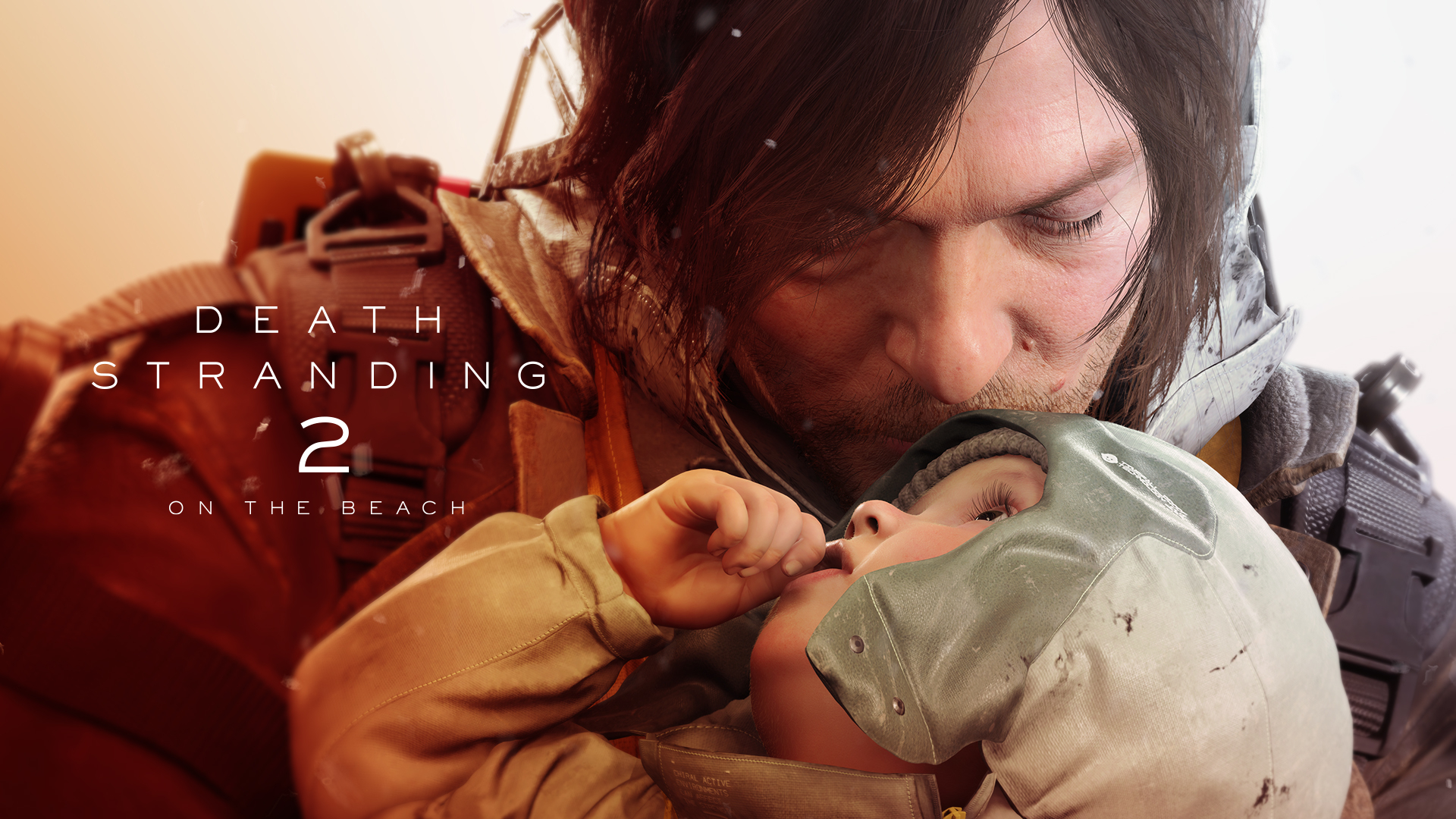
“Come on now, if we all pull together, we can lift up the weight of the world from your shoulders.”
This powerful line from `Glorious You` by Frank Turner, one of my favorite musical artists, consistently comes to mind as I immerse myself in Death Stranding 2: On The Beach.
Even if you haven`t played either installment, you are likely familiar with the series` fundamental concept: you embody a porter tasked with delivering packages across a desolate, post-apocalyptic landscape. Prior to the first game`s 2019 debut, director Hideo Kojima declared Death Stranding would pioneer a novel “Strand” genre. He elaborated in a tweet that summer: “By incorporating the concept of connection (strand), it`s a totally brand-new genre called action game/strand game (social strand system).”
This seemingly abstract idea translates into a remarkably unique gameplay experience. To facilitate swift and secure package deliveries, players can construct a diverse array of tools and infrastructure. This ranges from a simple climbing anchor for a rapid descent down a cliff face to an elaborate, extensive stretch of road connecting distant outposts.
As you progress through the world and its narrative, the structures you build begin to manifest in other players` games, offering them assistance. Simultaneously, the constructions made by others transform your own game world. You might approach a perilous drop and find a climbing anchor already in place, courtesy of another player. You could haul numerous resources to a road-building terminal, only to discover you need fewer supplies than anticipated because other players have already contributed a significant portion of the necessary materials.
This interconnected system not only saves you considerable time and streamlines your deliveries, but it also creates an incentive to actively contribute. You know that when, for instance, you deploy a zipline for a quick mountain descent, that very same zipline will probably appear in another player’s game, ready for their use.
The original game had already expanded its array of tools and infrastructure with the Director`s Cut release, naturally necessitating further development of these systems in Death Stranding 2. However, this evolution has led many players to feel that the sequel lacks some of the “friction” – the inherent challenges – that defined the first Death Stranding. Some argue that while the initial game offered a well-balanced set of systems to assist players, Death Stranding 2, in essence, “smooths over its difficulties” with an excessive number of mechanisms that overtly simplify the delivery process.
I concur with this assessment. In the original Death Stranding, I certainly transported far fewer packages and materials, often on foot, and had a more limited selection of helpful tools and infrastructure. In On The Beach, I primarily travel by truck, which not only carries significantly more than my backpack but also shields cargo from environmental hazards and Timefall – the game`s unique rain and snow that rapidly degrades anything it touches. While the truck`s battery power can induce some tension if a charging station isn`t found, fortunately, I`m almost always near a charging pole constructed by another player.
The game attempts to reintroduce some “friction” by increasing dangers. Players more frequently encounter enemies, who now possess more tools and infrastructure to confront them, and the environment itself has grown deadlier, featuring natural disasters like floods and landslides. Nevertheless, it still feels as though the additions and changes from the first game largely favor the player in the sequel.
But as the saying goes: more money, more problems. Just substitute chiral crystals for dollar bills.

In the original Death Stranding, every task felt monumental, especially as the game progressed and deliveries began to demand transporting packages within strict time limits or without exceeding specific damage thresholds. The “strand” aspect – where players assist each other – became a much lower priority. When I placed a ladder, it was because *I* needed it, and if it aided someone else, that was a bonus. I contributed to road construction because I desired the smoothest possible final leg of my journey. If my actions helped complete a larger highway section, that was great, but it wasn`t my primary objective.
In On The Beach, however, with so much potential to transport more materials with greater ease, I find myself compelled to complete the game`s highway and monorail systems simply for completion`s sake. I now approach the placement of shelters in the wild more strategically, choosing locations that will offer optimal resting points not only for myself, to alleviate immediate “friction,” but also for any other player whose game might feature that same shelter.
All of this was evidently considered by the developers at Kojima Productions during the game`s creation, as Death Stranding 2 introduces an entirely new category of side missions called “Aid Requests.” While these still encompass the familiar cargo deliveries and pickup requests from the first game, they now also include tasks like constructing specific infrastructure or placing certain tools in designated areas. The game doesn`t merely want you to make deliveries; it wants you to “fix” the world. And within this lies a new form of “friction”—one that elevates the micro-decisions of the first game to a macro scale.
“I know you’ve been working, as hard as you can. To preempt the question, the expectation, and I understand.”

This overarching mission further incentivizes additional deliveries, as doing so improves your standing with various recipients, who in turn grant access to larger quantities of their materials. The game`s new mining facilities and monorail tracks, enabling players to fabricate and then transport vast amounts of materials by rail, also support this new objective by facilitating multitasking and quicker generation of resources to aid others.
However, these new stakes and the transport of larger quantities of deliveries and materials also entail inherent dangers, as you are, proverbially, “putting all your eggs in one basket.” The game`s terrain feels even more dynamic than the first, demanding astute navigation across its, at times, treacherous paths. On multiple occasions, I`ve been so reckless attempting to reach a destination quickly that my truck sustained enough damage to severely compromise or, in some cases, entirely destroy my cargo.
And when I do lose those materials, the impact is even greater, as I`ve not only let myself down but also numerous other players. This feeling resonates more powerfully given our current times, where institutions meant to aid and protect us are either turned against us or dismantled. It`s clear to me that the only path to a brighter future is one forged by individuals uniting to protect their loved ones and showing empathy for complete strangers striving to do the same. Death Stranding 2 places this mission at its core, and when I fail in the game, I`m invariably reminded of the consequences of similar failures in our own lives, where, for me, failure is not an option.
“So don`t you worry. All things must end. There are sunlit uplands around the riverbend.”
While I concede that individual deliveries might demand less from the player, I personally commend how the game builds upon the foundation of the original Death Stranding. It evolves its various systems in fitting directions, feeling like a natural progression that places greater emphasis on collaborative gameplay. I imagine this expansion was an expectation for the development team, but I wonder if they anticipated such strong emotional reactions to this direction. Given Kojima`s history of foresight regarding societal progression and understanding of the human condition, evoking such emotional resonance was likely a natural byproduct of this destined gameplay evolution. Narratively, even greater responsibility to save the world falls upon the protagonist, mirrored by the literal increase in objects Sam carries. Yet, Death Stranding 2 powerfully conveys that if everyone works together, that immense weight can be lifted.