

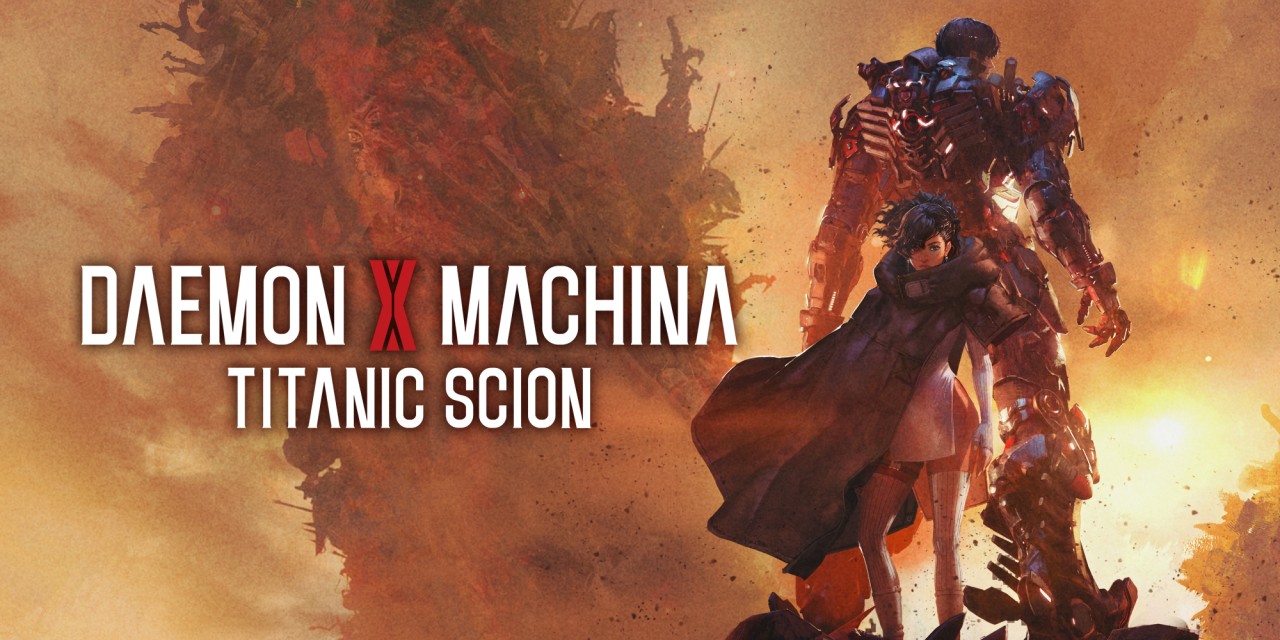
When picturing mechs, one often envisions colossal machines, comparable to towering buildings or the impressive 65-foot Unicorn Gundam. While the `Arsenals` from the original Daemon X Machina were not quite as immense, they still required cockpit entry for piloting. However, Daemon X Machina: Titanic Scion introduces a significant transformation: Arsenals are no longer large mechs but compact mech suits. This distinction is vital, as it offers a seamless, direct feel to every movement, whether boosting across terrain or swinging a blade. Surprisingly, playing the initial hours of Titanic Scion evoked a positive comparison to Anthem.
Despite Anthem`s troubled past, this comparison is not meant negatively. Instead, Titanic Scion presents a custom avatar flying a powerful, customizable mech suit in an open world, taking on missions with other players. Crucially, it avoids the pitfalls of a misguided live-service, loot-grinding model. It genuinely feels like a significant upgrade from its Nintendo Switch-limited predecessor, which, despite hardware constraints, impressively retained its distinctive anime and metallic visual aesthetic.

Titanic Scion kicks off with an extensive expositional crawl, introducing key terms like `outers` – individuals who have surpassed human limitations and are subsequently ostracized and exploited. Players create their own protagonist, customizing hair, body, and voice, who wakes up in a cosmic facility known as the Garden. Intended to be converted into a `centurion,` the hero is suddenly plunged into an immediate escape scenario.
A character named Nerve facilitates the protagonist`s escape, and together they commandeer Arsenal suits. Each Arsenal can wield a weapon in either hand, allowing for instant swapping to suit different combat situations. The left and right triggers activate the corresponding armaments. Both ranged and melee attacks feature a lock-on system, enabling precise engagement and even lunges when using close-quarters weapons.

A quick dodge, consuming stamina, can be performed using the right bumper. Separately, the Femto gauge fuels critical skills like boosting and flight. Soon, the protagonist is overwhelmed by adversaries, including a formidable crimson Centurion. During the chaotic escape, separation from Nerve leads to a crash landing on a red planet, where new companions are discovered: Forge, another Arsenal user, and his seemingly robotic son, Toby.
This hostile desert wasteland presents another threat: `immortals,` creatures formed from outers corrupted by femto energy. Initial encounters with these beasts are easily manageable, yielding parts upon defeat. Interestingly, when an enemy drops loot, players can only pick up a single item, necessitating a thoughtful decision between new gear, a useful consumable, or valuable crafting materials.
Following the perilous escape from the Garden, the need for superior equipment becomes evident. As players journey with Forge and Toby towards their home base, they can acquire resources by salvaging gear from defeated immortals, gathering femto from `femtrees,` and mining environmental deposits for ore.

An integrated scanner aids in exploring the open world. A significant improvement is the ability to activate jet boots with a double-tap of the jump button, enabling effortless flight across the map. Femto energy can be expended for enhanced speed, allowing players to engage airborne enemies. The sensation of flight is fluid, exhilarating, and the quickest mode of travel. Aerial combat is as satisfying as ground combat, with dynamic maneuvers and the strategic use of speed and positioning for tactical advantage.
Upon reaching the home base, the game`s structure becomes clear. This hub allows players to accept missions, upgrade facilities, and even boost perks by consuming ice cream. A notable departure from its predecessor is the flexibility to select multiple missions and then venture into the open world to complete them as desired, tracking them via the map. Fast travel points also become accessible upon discovery.

Missions can be undertaken in online co-op with up to three players, or solo offline. While online co-op wasn`t tested, welcome asynchronous features were apparent. For instance, players might stumble upon the wreckage of other players, from which they can salvage gear. Additionally, supply bases can be constructed at designated points to restore health or modify loadouts without returning to the main hub. When playing online, players gain access to supply bases built by others. The preview left it unclear whether dismantling another player`s supply base would impact them directly or simply remove a resource for the player who destroyed it.
Operating a mech suit rather than a massive mech also enables broader interactions. Beyond exhilarating aerial maneuvers, players can surprisingly mount and ride corrupted yet non-hostile horses, and later control turrets to decimate immortal hordes. The most impressive combat skills, however, are reserved for Arsenal engagements. These include the ability to stagger an enemy, then grab and hurl them against a wall or into another foe. Intense melee clashes with rival mechs lead to satisfying standoffs where blades lock and require rapid button presses to gain the upper hand. These mechanics exude the vibrant energy of late 2000s action games, and I am thoroughly impressed.

Late in the preview, an intriguing `factors` system was introduced, allowing players to modify their genes to unlock new skills or passive buffs. While the system`s depth remains to be seen, its most compelling aspect is the physical toll associated with gaining inhuman power. This leads to visible mutations on the character`s body, ranging from new markings to significantly altered facial features. Although a reset option exists, its high cost (at least early on) forces players to carefully weigh the consequences of power against physical appearance. The preview did not clarify if these transformations have a more direct gameplay impact beyond aesthetics, which would add another layer of strategic consideration.
The initial hours of Daemon X Machina: Titanic Scion seem to offer only a glimpse of its full potential. I eagerly anticipate experiencing the complete game when it launches on PC, Nintendo Switch 2, PS5, and Xbox Series X|S this September 5th.