

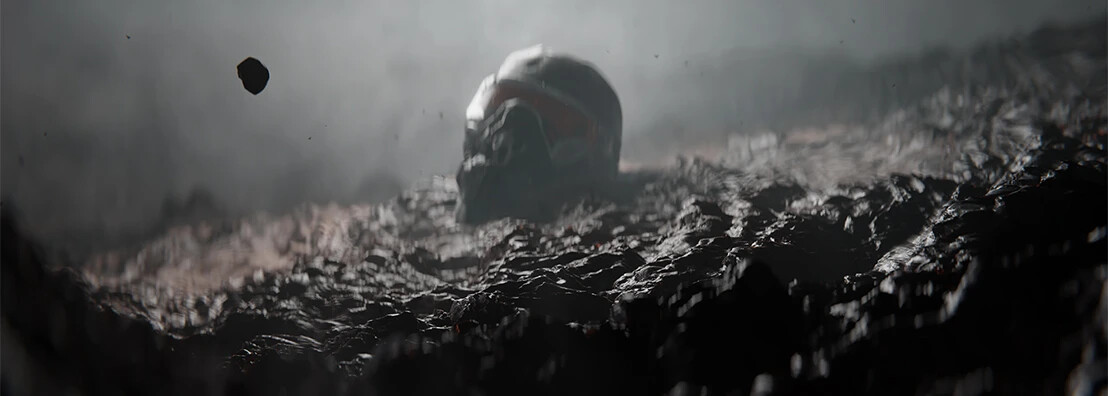
Crytek, established in 1999 by the Turkish-German brothers Cevat, Avni, and Faruk Yerli, is now the subject of a new limited-series documentary. The initial installment of this series is already available online, offering an unprecedented look into the studio`s history. Viewers can explore never-before-seen footage, early concept art, and gain deeper insights into the pivotal moments that shaped Crytek.
The documentary begins by recounting the brothers` formative experience with a “black box” PC, which their father believed was for academic pursuits. However, the Yerli siblings harbored clear aspirations for their future in gaming, alongside a strong sense of what they wished to avoid.
Avni Yerli explains, “We aspired to be distinct from typical German game companies, which at the time often produced complex strategy and RPG titles. Our vision was to deliver open-world or semi-sandbox experiences, allowing players to freely explore and interact with environments, a concept that was truly innovative then.”
Based initially in Coburg, Germany, Crytek`s core mission was to advance real-time 3D graphics in video games. Their early technological demonstrations, like X-Isle, garnered attention from Nvidia, culminating in a publishing agreement with Ubisoft for their breakthrough title, Far Cry, which launched in 2004.
The first segment of the documentary primarily delves into the development of Crysis, highlighting how the team leveraged lessons from Far Cry to push graphical boundaries even further.
Marcel Schaika, a 3D artist for Crysis, remarked on the evolution: “For Far Cry, our art team conceptualized natural environments from their imagination. With Crysis, however, we strived for extreme fidelity, mimicking nature as closely as possible. This approach made a substantial difference, even if the underlying technology wasn`t vastly dissimilar in certain aspects.”
Schaika further elaborated, “Our method of constructing environments and utilizing technology was specifically geared towards emulating natural phenomena—how sunlight filters through leaves, the appearance of the ocean, or water refraction. The collaborative effort between artists and engineers to create a virtual world mirroring our collected real-world references was, I believe, what truly set Crysis apart.”
This initial part runs for approximately 20 minutes, and the total number of episodes in the series remains undisclosed.
In related Crytek news, the studio recently underwent layoffs earlier this year, leading to the postponement of a new Crysis sequel.
This article has been rephrased and translated from the original content, with all advertisements and non-essential HTML elements removed for a clearer reading experience.